
What Is an Amazon Seller Account in the UAE?
Amazon.ae has been growing like crazy over the last few years, and a lot of people are jumping on it. An Amazon seller account in the UAE lets any business list and sell products on the platform, managed through Amazon Seller Central. It works for UAE residents and even non-residents, as long as the right business setup is in place first.
In a 30-minute call we map your situation against jurisdiction, activity and cost — no commitment required.
Do You Need a Trade Licence to Sell on Amazon UAE?
Short answer, yes. A lot of first-time sellers skip this part and then hit a wall during verification. To sell on Amazon UAE as a business, a valid trade licence is needed, and the activity on that licence should match e-commerce or trading. Free zone and mainland licences both work. (Non-residents who want to get in on this need to sort out a UAE business setup before anything else. That is the actual first step, not the Amazon registration.)
Amazon Seller UAE Requirements
Pull these together before even opening the registration page:
Valid UAE trade licence
Emirates ID or passport
UAE bank account
Phone number and email address
Business address
Tax information, if applicable
Individual vs Professional Amazon Seller Account
Two options, and the difference is pretty straightforward.
Individual accounts are for people selling fewer than 40 items a month. No monthly fee, but there is a per-item charge of around AED 3.67 on every sale. Tools are basic.
A professional account is for anyone selling regularly or planning to grow. Around AED 146.90 a month, but it opens up the full set of selling tools, advertising features, and all product categories. (Most sellers who are serious about it find that the monthly fee pays itself back fast enough that it is not really a debate.)
We’ll model the requirements and send back a single-page breakdown within 24 hours.
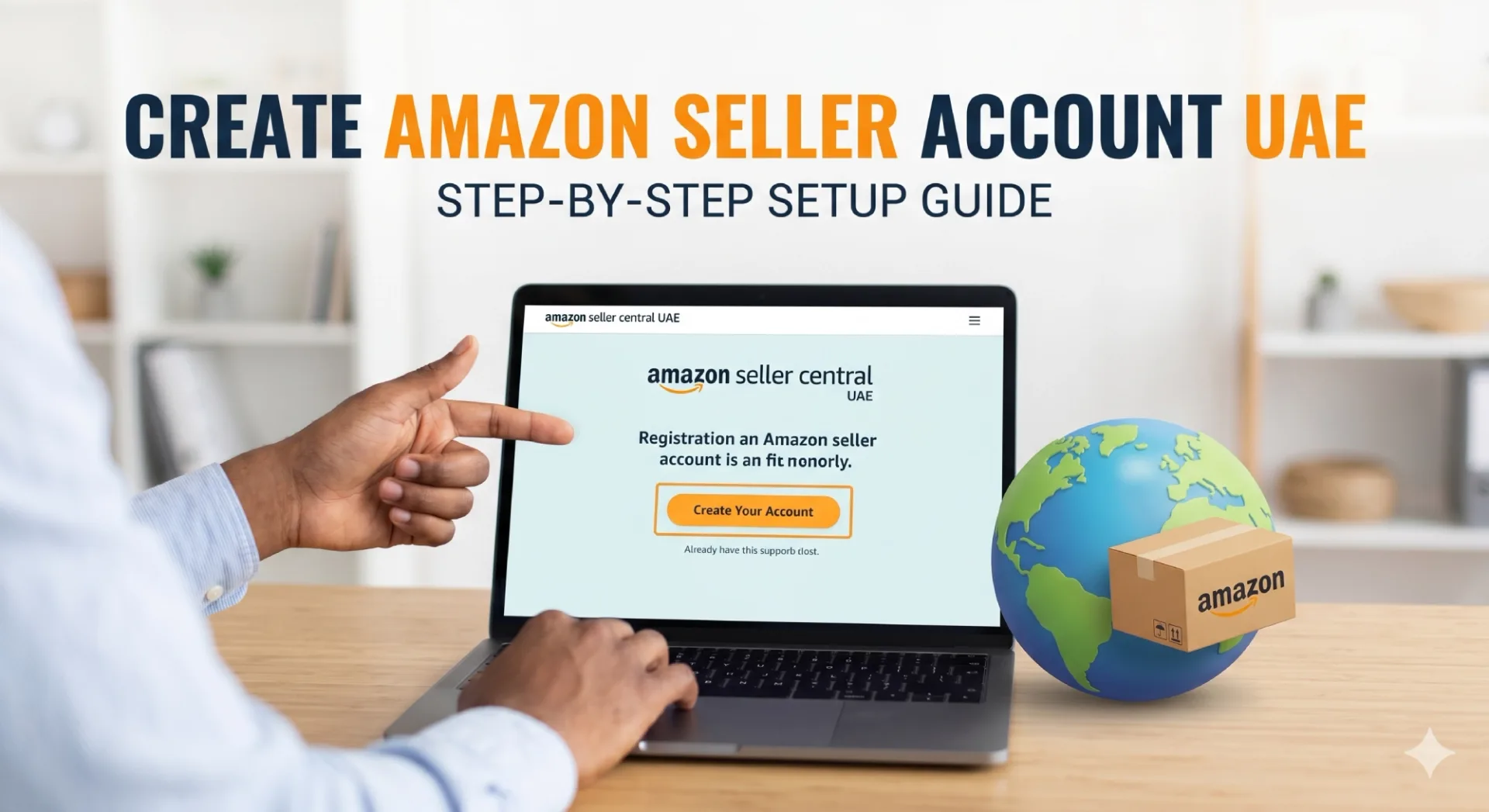
How to Create an Amazon Seller Account in the UAE
- Prepare Your Business Documents
Trade licence, Emirates ID or passport, and bank details. Confirm the business activity covers trading or e-commerce before starting. Finding out it does not match halfway through registration is frustrating.
- Visit Amazon Seller Central UAE
Head to sell.amazon.ae and kick off the Amazon UAE seller registration. Pick individual or professional, and fill in the business details as the form asks for them.
- Complete Identity and Business Verification
Upload the documents, verify the phone and email, and put in the bank account details. Amazon goes through all of this before the account is approved. Every detail needs to match exactly because even small mismatches cause rejections.
- Add Product and Tax Details
Pick the product categories and fill in tax details if needed. Some categories need extra approval before selling in them. Worth checking this early rather than after the account is already live.
- Choose a Fulfilment Method
FBA means Amazon handles storage, packing, and shipping. Seller-fulfilled means doing all of that personally. FBA is popular with new sellers because it keeps operations simple. Seller-fulfilled makes more sense when there is already a logistics setup running.
- List Products and Start Selling
Write product titles and descriptions, upload good photos, set pricing, and choose delivery options. The listing quality genuinely affects how much visibility a product gets, so it is worth spending time on this part.
Amazon Seller UAE Fees
Individual plan: around AED 3.67 per item sold
Professional plan: around AED 146.90 per month
Referral fees: 5% to 15%, depending on the product category
FBA fulfilment and storage fees if using Amazon's warehouses
Refund admin charges where applicable
Conclusion
Amazon UAE is genuinely one of the better opportunities out there for product-based businesses right now. The setup is not complicated, but the licence, verification, and account type decisions need to be right from the start, or things get delayed. If the business setup side needs sorting first before jumping into the Amazon registration, Nexture takes care of trade licences and all the paperwork, so the focus stays on actually building the store.