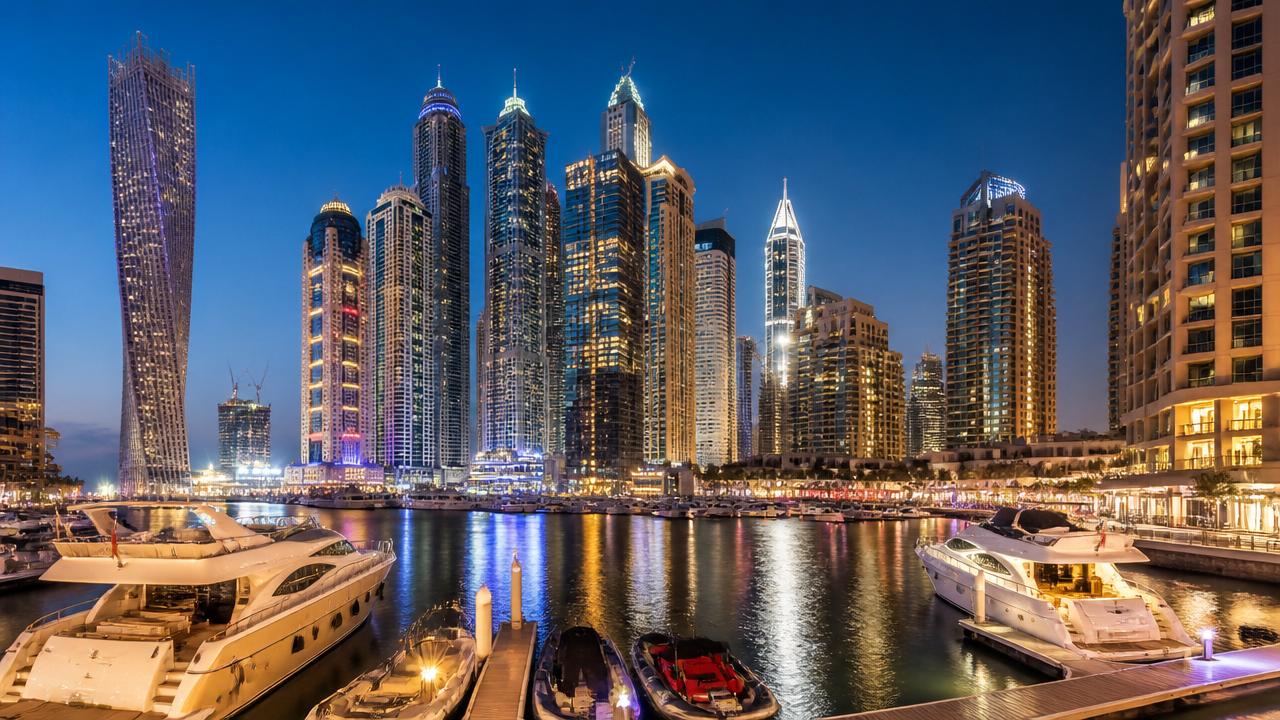

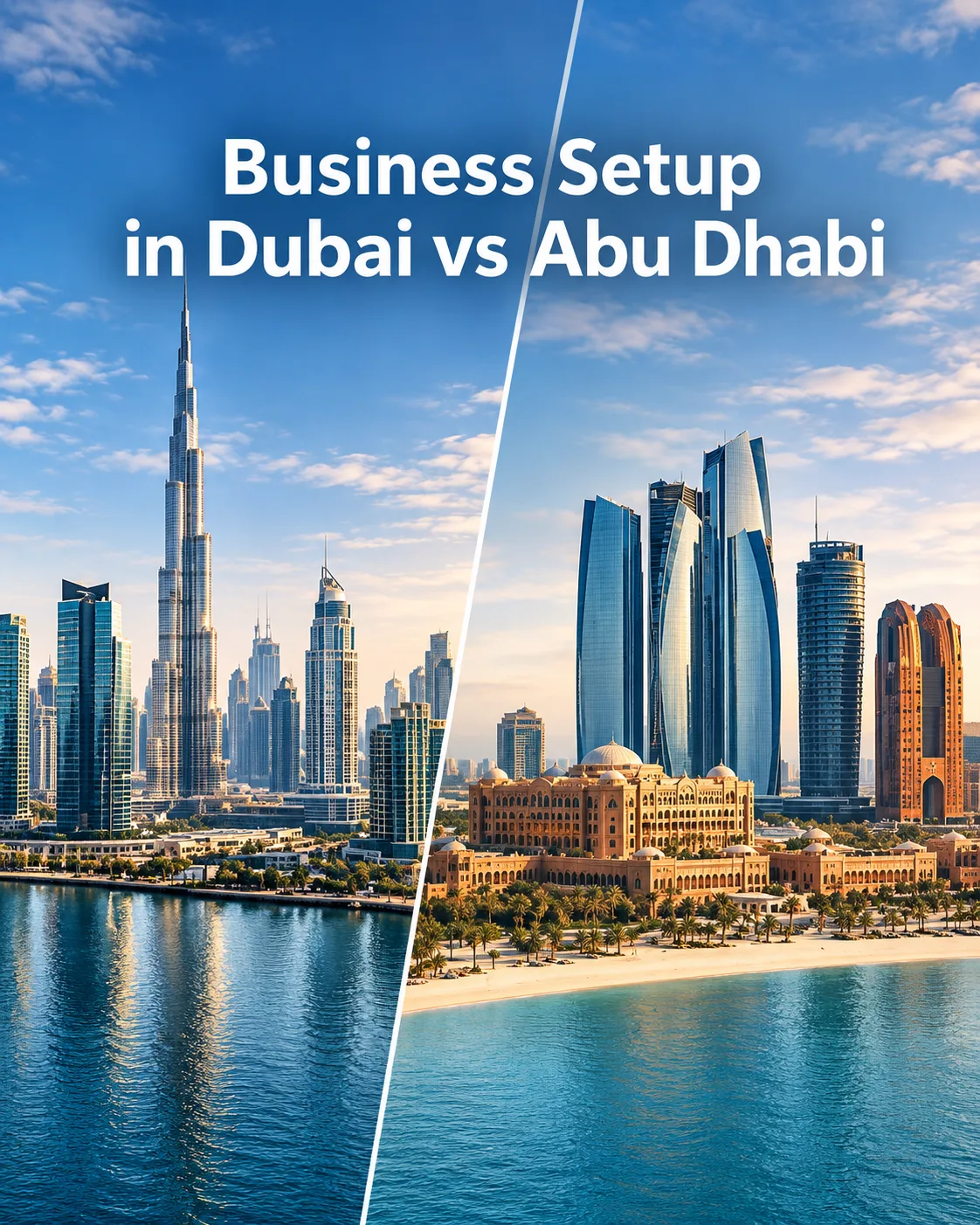
Dubai is usually the first place foreign entrepreneurs think of when starting a company in the UAE. It has a large international business community, dozens of specialised business districts, and direct access to customers across sectors such as tourism, real estate, technology, retail, and logistics.
Abu Dhabi is a different proposition. The UAE capital has built strong business clusters around finance, energy, advanced technology, manufacturing, media and government-linked industries. Some licences and operating models can also be surprisingly cost-effective.
So, if you are comparing business setup in Dubai vs Abu Dhabi, asking which city is cheaper does not give you the full answer. The better question is this: where will your company get the most value for the money you spend?
For a small consultancy, the answer may be Dubai. For an industrial manufacturer, Abu Dhabi could make far more commercial sense. A financial company may have to compare DIFC and ADGM rather than the two cities as a whole.
Here is how the two emirates compare in 2026.
Dubai vs Abu Dhabi Business Setup at a Glance
Factor | Dubai | Abu Dhabi |
Mainland authority | Dubai Department of Economy and Tourism (DET) | Abu Dhabi Department of Economic Development (ADDED) |
Mainland option | Available | Available |
Free zones | More than 20 | Several major specialised zones |
Foreign ownership | 100% for most eligible activities | 100% available for eligible structures and activities |
Strong sectors | Trade, tourism, e-commerce, logistics, technology, real estate and professional services | Finance, energy, manufacturing, AI, industrial activities, media and government-linked sectors |
Major financial centre | DIFC | ADGM |
Industrial/logistics hubs | JAFZA, Dubai South | KEZAD |
Startup ecosystem | Large private-sector and investor network | Strong government-backed startup programmes |
Local market | Large consumer and international business market | Strong institutional and government-linked market |
Corporate tax | UAE federal rules apply | UAE federal rules apply |
VAT | UAE federal rules apply | UAE federal rules apply |
Both cities allow mainland and free-zone company formation. Dubai's mainland companies are regulated by DET, while Abu Dhabi mainland licensing falls under ADDED. Dubai currently has more than 20 free zones covering sectors ranging from trade and financial services to technology and media.
In a 30-minute call we map your situation against jurisdiction, activity and cost — no commitment required.
1. Business Setup Costs: Which Is Cheaper?
This is where comparisons can become misleading.
There is no single "Dubai company setup price" or "Abu Dhabi company setup price." Your actual cost depends on the business activity, legal structure, number of shareholders, visas, workspace, external approvals and chosen jurisdiction.
Dubai
Dubai free zones offer options at very different price levels. Invest in Dubai states that some freelance packages start from around AED 5,000, while office packages for four people can reach AED 62,500. Premium zones and companies requiring warehouses or large offices may cost considerably more.
For a typical Dubai mainland company, your budget may include the DET licence, trade-name reservation, Memorandum of Association where required, Ejari-registered premises, immigration establishment file, visas and sector-specific approvals.
Abu Dhabi
Abu Dhabi also offers several low-entry options.
For example, Masdar City Free Zone currently lists its Start-Lite package at AED 7,000 per year, with two eligible business activities and one visa, subject to the package conditions.
KEZAD publishes several free-zone packages based on visa requirements and duration. Its published one-year packages include options starting around the low five-figure range, with prices varying according to the selected package.
There is another interesting option for media companies. Abu Dhabi's Creative Media Authority currently states that licence and registration fees for qualifying new Creative Zone partners are fully waived for the first two years.
So Abu Dhabi can provide excellent value in specific sectors. But it would be wrong to say that it is always cheaper than Dubai.
The correct comparison has to be made licence against licence.
- Mainland Business Setup: Dubai vs Abu Dhabi
A mainland company makes sense when your business needs direct access to the UAE market, physical premises, local customers or activities that are better suited to an onshore structure.
Dubai mainland companies are registered through DET. Most permitted activities allow full foreign ownership, although restrictions still apply to certain strategic activities.
Dubai also offers an Instant Licence for eligible activities. According to Invest in Dubai, it can be issued within five minutes and can include a virtual site for the first year.
Abu Dhabi provides its Standard Licence for conventional mainland businesses and several other options, including Trader, Freelancer, Dual and Virtual licences. ADDED specifically states that its Freelancer Licence allows eligible investors to operate remotely without physical office premises.
For some online businesses, Abu Dhabi also allows eligible applicants to obtain a licence through TAMM without renting conventional premises. This can make a major difference to your first-year spending if you do not genuinely need an office.
- Free Zones: Dubai Gives You More Choice
Dubai has a clear advantage when variety is important. You can choose between free zones designed around different industries and operating models. DMCC serves a broad international trading and services community. JAFZA suits trade, logistics, warehousing and manufacturing. DIFC focuses on financial and professional services. Dubai Internet City targets technology businesses while Dubai South sits close to major logistics infrastructure.
Dubai's official investment portal confirms that the emirate has more than 20 free zones. This range gives founders more room to compare licences, office options and locations.
Abu Dhabi has fewer free zones, but several of them are highly specialised.
ADGM is a major international financial centre. KEZAD is built around manufacturing, logistics and industrial operations. Masdar City attracts companies working in technology, sustainability and future-focused industries while Abu Dhabi's Creative Zone supports media and creative businesses.
In other words, Dubai gives you more choices. Abu Dhabi can give you a very strong sector match.
- Which City Is Better for Startups?
For general startup activity, Dubai has scale. Invest in Dubai says the emirate is home to roughly 86% of UAE startups, citing StartupBlink data. It also reports more than 380 venture capital funds and 325 wealth-management firms within its wider financial ecosystem.
This makes Dubai particularly attractive if your startup needs private investors, customers, international talent and regular networking opportunities.
Abu Dhabi takes a more programme-driven approach.
Hub71 is one of the clearest examples. Its current Access Programme provides selected startups with AED 250,000 in in-kind support plus AED 250,000 in cash in exchange for equity through a SAFE note. Eligible high-performing companies may receive further funding.
In June 2026, Hub71 reported that its Cohort 18 attracted 2,453 applications from 112 countries, with 27 startups selected.
For a normal consulting or e-commerce startup, Dubai's broader commercial market may be more useful. For a venture-backed AI, climate-tech, digital-assets or deep-tech company that qualifies for Abu Dhabi programmes, the value equation can look very different.
- Financial Services: DIFC or ADGM?
Both emirates have globally recognised financial centres.
Dubai has the Dubai International Financial Centre (DIFC). It supports regulated financial companies, professional services firms, family offices, fintech companies, investment businesses and related institutions.
Abu Dhabi has Abu Dhabi Global Market (ADGM), which has expanded rapidly.
As of September 2026, ADGM reported almost 14,000 active licences, with assets under management growing 54% year on year during the first half of 2026. It also reported 190 fund and asset managers and 276 funds managed from the centre.
For financial businesses, choosing between Dubai and Abu Dhabi should therefore come down to your regulatory activity, target investors, office location, licence requirements and the ecosystem in which your customers operate.
City-wide comparisons become much less useful here.
- Manufacturing and Logistics
Dubai is an established international logistics centre. JAFZA connects businesses directly with Jebel Ali Port and serves thousands of trading, manufacturing and logistics companies. Dubai South also provides access to major transport infrastructure and the developing Al Maktoum International Airport area.
Abu Dhabi has a strong proposition through KEZAD. Its industrial ecosystem provides access to land, warehouses, manufacturing facilities and logistics connections around Khalifa Port. Recent investment provides a good indication of its industrial focus. In May 2026, KEZAD announced an agreement for a 10,000-square-metre advanced manufacturing centre and another AED 300 million beverage production facility covering approximately 32,500 square metres.
If your business needs significant industrial space rather than a small office, comparing KEZAD with Dubai's major industrial zones can save far more money than simply comparing licence fees.
- Does Tax Make Dubai or Abu Dhabi Cheaper?
No major advantage exists here because corporate tax and VAT are federal taxes.
Under the UAE corporate-tax system, taxable income up to AED 375,000 is subject to 0% corporate tax, while the portion above AED 375,000 is generally taxed at 9%.
Free-zone companies should not automatically assume that all their income is taxed at 0%.
A Qualifying Free Zone Person can benefit from 0% corporate tax on qualifying income when the required conditions are satisfied. Other income may fall under the standard corporate-tax regime.
VAT rules are also the same in both emirates. The mandatory VAT registration threshold for a UAE-resident business is AED 375,000 in taxable supplies and imports, subject to the applicable rules.
- Which Emirate Gives More Value for Your Business?
There is no universal winner.
Dubai usually gives better value when your business depends on a large private-sector customer base, international networking, tourism, e-commerce, professional services, real estate, retail or a wide choice of free zones.
Abu Dhabi can give better value when you work in manufacturing, energy, institutional finance, government-linked industries, advanced technology or specialised sectors supported by its economic zones and startup programmes.
Consider two examples.
If you are launching a three-person digital consultancy selling to SMEs throughout Dubai, paying slightly more for a Dubai setup may put you closer to customers and reduce the time and cost spent travelling for meetings.
Now imagine that you are opening an industrial technology company requiring warehouse space, port access and future manufacturing capacity. A KEZAD setup could offer far more practical value even if another jurisdiction advertises a cheaper basic licence.
This is why licence price alone should never decide your location.
How Nexture Can Help You Choose
Before registering your company, compare the complete first-year and renewal costs for both emirates. Nexture can help you assess the business activity, mainland or free-zone structure, licence, office requirements, visa needs, regulatory approvals and expected operating costs.
The objective is simple: choose the jurisdiction that fits the way you will actually earn revenue, hire people and operate after the licence is issued.
We’ll model the requirements and send back a single-page breakdown within 24 hours.
Conclusion
When comparing business setup in Dubai vs Abu Dhabi, value comes down to what your company needs after incorporation.
Dubai offers a larger commercial ecosystem, more free-zone choices and strong access to private-sector customers, investors and international businesses. It can be an excellent base for trading, consulting, technology, e-commerce and consumer-facing companies.
Abu Dhabi offers strong sector-specific opportunities in finance, energy, manufacturing, media, AI and industrial businesses. Free zones such as ADGM, Masdar City and KEZAD, combined with programmes such as Hub71, can make the capital particularly attractive for certain founders.
Do not choose between the two based on the cheapest licence advertisement.
Calculate the licence, office, visas, approvals, renewals and operating costs. Then consider where your customers, suppliers, employees and industry network are located.
That comparison will tell you which emirate gives your business more value.
Frequently Asked Questions
Is it cheaper to set up a business in Abu Dhabi or Dubai?
It depends on the licence and business model. Abu Dhabi offers some competitively priced options, including specialised packages in Masdar City and other zones. Dubai also has low-cost free-zone and freelance options. Compare complete first-year costs rather than licence fees alone.
Is Dubai better than Abu Dhabi for starting a business?
Dubai can suit businesses that depend heavily on private-sector clients, international trade, tourism, e-commerce and professional services. Abu Dhabi can be a strong choice for finance, manufacturing, energy, technology and government-linked sectors.
Can foreigners own 100% of a company in Dubai and Abu Dhabi?
Full foreign ownership is available for many mainland activities and is widely available in free zones. Some strategic or regulated activities can have additional ownership or approval requirements, so your exact business activity should be checked before incorporation.
Which is better for a startup, Dubai or Abu Dhabi?
Dubai has a larger general startup and private-investment ecosystem. Abu Dhabi offers major government-backed startup programmes such as Hub71. The better location depends on your sector, funding stage and target customers.
Is corporate tax different in Dubai and Abu Dhabi?
No. UAE corporate tax is federal. The standard regime generally applies 0% to taxable income up to AED 375,000 and 9% to the portion above that amount, subject to the Corporate Tax Law and applicable reliefs. Qualifying free-zone businesses have separate rules for qualifying income.
Can I set up in Abu Dhabi and do business in Dubai?
Depending on your licence, activity and legal structure, a UAE business can serve customers in other emirates. However, certain activities, physical locations and mainland operations may require additional permits, branches or local licensing. Check this before selecting a free-zone structure.