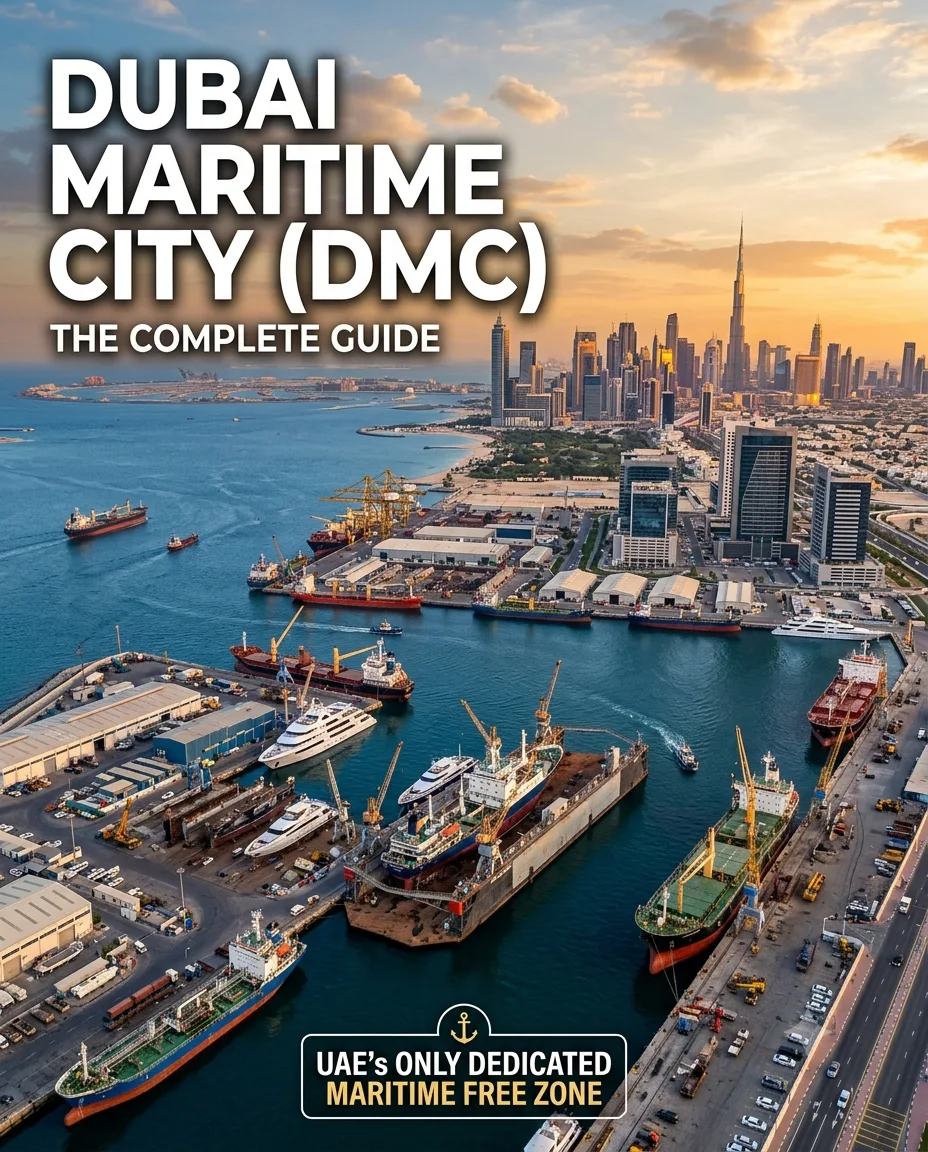
If your business touches ships, yachts, ports, or anything that floats, Dubai Maritime City deserves a spot on your shortlist. It's the only free zone in the UAE built specifically around the maritime industry, and it sits on a man-made peninsula between Port Rashid and Dubai Dry Docks, just a few kilometers from Sheikh Zayed Road.
This guide covers what DMC actually is, who it's built for, how licensing works, and what it costs to set up there. No filler, just the details you need before you commit.
What Is Dubai Maritime City?
Dubai Maritime City (DMC) is a 249-hectare waterfront development created to bring the entire maritime value chain under one roof: ship repair, shipbuilding, yacht manufacturing, marine services, maritime training, and commercial offices for shipping companies. It launched in 2004 under the vision of Sheikh Mohammed Bin Rashid Al Maktoum, and today it operates as part of the DP World group, under the regulatory umbrella of the Ports, Customs and Free Zone Corporation (PCFC).
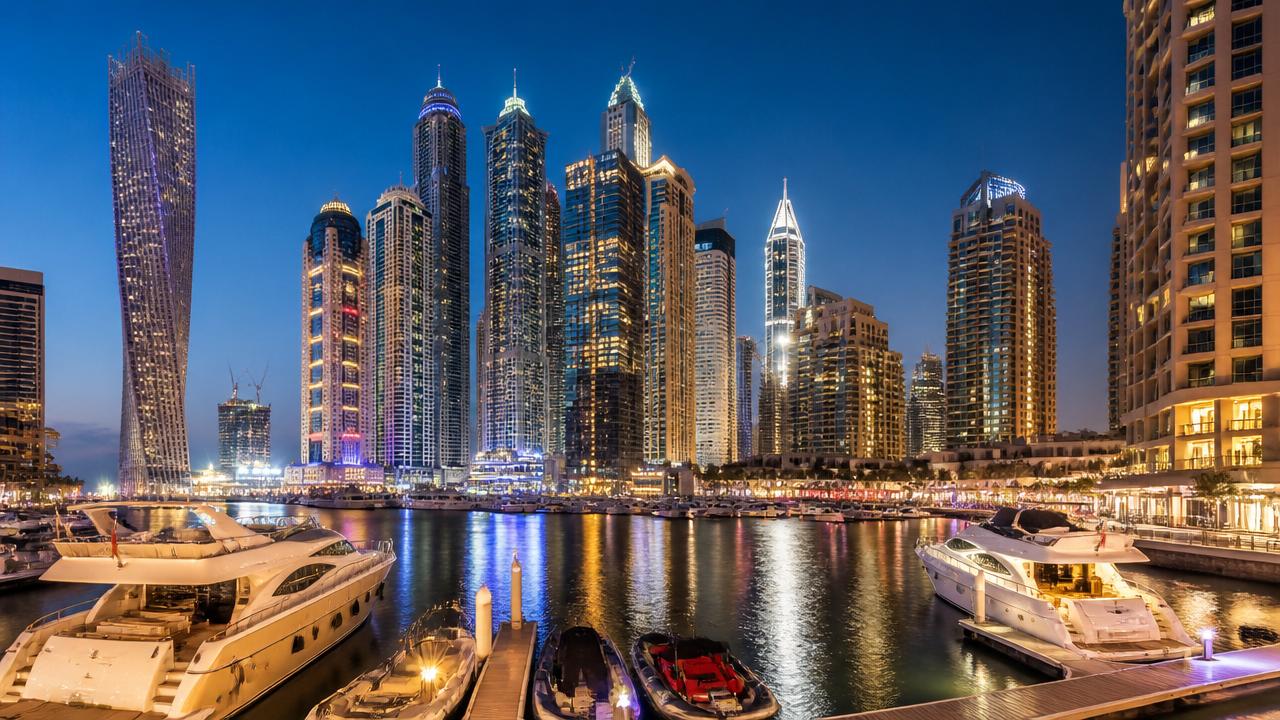
The zone runs as a mixed-use district rather than a single office park. You'll find working shipyards next to corporate towers, and waterfront apartments a short walk from dry docks. That combination is unusual for a UAE free zone, most of which separate industrial and residential functions completely.
DMC is split into six areas, each built for a different function:
Zone | What it's for |
Industrial Precinct | Ship repair, shipbuilding, warehousing, dry docks |
Maritime Centre | Corporate offices, showrooms, five high-rise towers |
Harbour Offices | Office plots for maritime-linked businesses |
Academic Quarter | Maritime training and education |
Marina District | Yacht club, dining, waterfront leisure |
Harbour Residences | Waterfront apartment towers |
The Industrial Precinct is where the actual work happens. It holds over 200 warehouses across four zones, 19 ship repair plots, and two ship lifts. In September 2024, DP World completed an infrastructure upgrade at DMC that installed new 6,000-tonne and 3,000-tonne ship lifts, more than doubling the zone's annual ship handling capacity from 400 to 1,000 vessels. By that point in the year, DMC had already docked 296 vessels, with dry berth occupancy up 16% from the year before.
In a 30-minute call we map your situation against jurisdiction, activity and cost — no commitment required.
Why Businesses Choose Dubai Maritime City
A workforce and supply chain already built for the industry.
You're not setting up in a generic business park and hoping maritime suppliers are nearby. Ship chandlers, marine engineers, surveyors, and repair specialists already operate inside DMC, so sourcing parts or subcontracting work takes less time than starting from scratch elsewhere.
Direct sea access.
DMC sits on reclaimed land specifically shaped for berthing, dry docking, and vessel movement. That's not something you get in a landlocked free zone, no matter how good the tax incentives are.
Standard UAE free zone incentives.
Like other UAE free zones, companies registered in DMC get 100% foreign ownership, full repatriation of profits and capital, and no personal income tax. Corporate tax still applies under the UAE's federal regime, so check our UAE corporate tax guide or speak with a tax advisor to see whether your specific activity qualifies for the 0% Qualifying Free Zone Person rate before assuming it applies to you.
Proximity to central Dubai.
Despite being a working port zone, DMC is close to Jumeirah, Downtown Dubai, and the wider business district. Staff aren't stuck in an industrial zone an hour from anywhere.
DP World backing.
DMC operates under DP World, the same group that runs Jebel Ali Free Zone (Jafza) and Drydocks World. That matters for long-term infrastructure investment. Drydocks World, DMC's largest tenant, opened a 75,000-square-meter expansion in late 2024 to add fabrication capacity for offshore and energy transition projects, a sign the zone keeps attracting serious capital rather than sitting still.
Who DMC Is Actually For
DMC isn't the right fit for every business type. It's built around a specific set of activities:
Ship repair, maintenance, and dry docking
Shipbuilding and yacht manufacturing
Marine engineering and offshore services
Maritime trading, chandlery, and spare parts supply
Shipping and freight forwarding offices
Marine consultancy, surveying, and classification services
Maritime training and education providers
Support services: legal, insurance, and logistics firms serving the maritime sector
If your business has no operational connection to shipping or marine activity, a general trading or commercial free zone will usually serve you better and cost less.
How to Set Up a Business in Dubai Maritime City
Licensing for DMC doesn't run through a separate DMC authority. Dubai Maritime City is registered under Jebel Ali Free Zone (Jafza), the flagship free zone of DP World, so your license application goes through Jafza, and Dubai Maritime City FZE handles the leasing side once you're approved.
Here's the practical sequence:
Get initial approval from Jafza. You'll need to confirm your business activity falls within DMC's permitted list and submit your application through Jafza's channels. Our UAE business licensing guide breaks down how activity codes and approvals typically work across free zones.
Approach Dubai Maritime City FZE for leasing. Once initial approval comes through, you contact DMC directly to discuss space: warehouse, office, shipyard plot, or berth, depending on your activity.
Complete the leasing agreement. DMC will walk you through unit sizes, terms, and pricing for your chosen facility.
Return to Jafza to finalize the license. With your signed lease in hand, Jafza completes the licensing process and issues your trade license.
Apply for visas and open a bank account. Once licensed, you can sponsor employee and investor visas and set up corporate banking. A PRO services provider can help manage the visa, documentation, and government-liaison side of this step.
Because two entities are involved (Jafza for licensing, DMC for leasing) it's worth budgeting extra time for coordination between the two, especially if you need a large industrial plot rather than a standard office unit.
Facilities and Leasing Options
DMC offers several property types depending on what your business does:
Warehouses: starting from 510 square meters, aimed at ship repair companies that need space for parts, materials, and equipment
Workshops and shiplifts: for direct repair and maintenance work
Office towers: in the Maritime Centre and Harbour Offices districts, for companies that don't need industrial space
Retail and showroom units: mainly for maritime-facing consumer businesses like chandlery shops, restaurants, and documentation services
As of the most recent published figures, DMC hosted 280 registered businesses leasing 340 units and employing roughly 7,500 people. Those numbers will have moved since the 2024 infrastructure upgrade, so confirm current availability directly with DMC before finalizing a plan. The UAE Ministry of Economy and Tourism's listing for Dubai Maritime City is also a useful reference point for the zone's official standing.
We’ll model the requirements and send back a single-page breakdown within 24 hours.
DMC Compared to Other UAE Maritime and Trading Free Zones
DMC's advantage is specialization. Free zones like Jafza or Dubai South offer broader trading and logistics licenses, but neither is purpose-built around ship repair and marine engineering the way DMC is. If your business is genuinely maritime, that specialization means shared infrastructure, from ship lifts to marine surveyors, that you'd otherwise have to arrange yourself.
The trade-off is flexibility. A general trading license in Jafza or Dubai South lets you pivot into unrelated activities later without much friction. DMC's licensing ties closely to maritime activity codes, so it suits companies that plan to stay in the sector rather than businesses testing multiple industries at once.
Costs to Expect
Dubai Maritime City doesn't publish a fixed public rate card, since costs depend heavily on facility type, plot size, and lease term. As a general guide:
Office and warehouse leases are priced per square meter and negotiated directly with DMC
License fees are set by Jafza and vary by activity type and number of visas required
Industrial plots and shipyard space carry separate commercial negotiations, often for multi-year terms
Get a written quote from both Jafza and DMC before committing. Verbal estimates from third-party consultants can be outdated, since infrastructure upgrades and demand shifts affect pricing over time.
Conclusion
Dubai Maritime City works because it doesn't try to be everything. It's a working port with dry docks, ship lifts, and warehouses sitting next to office towers and apartment buildings, all built around one industry. If ship repair, shipbuilding, or marine services are your business, the shared infrastructure and DP World backing make DMC worth the extra coordination between Jafza and DMC's leasing team. If your business has no real connection to shipping, you'll get more flexibility and a simpler setup process in a general trading free zone.
Frequently Asked Questions
Is Dubai Maritime City a free zone?
Yes. DMC operates as a UAE free zone, offering 100% foreign ownership and full repatriation of profits, with licensing processed through Jafza.
Where exactly is Dubai Maritime City located?
It sits on a man-made peninsula between Port Rashid and Dubai Dry Docks, close to Sheikh Zayed Road and central Dubai.
Who owns Dubai Maritime City?
DMC operates as part of the DP World group, the same parent company behind Jafza and Drydocks World.
What kind of businesses can set up in DMC?
Ship repair and shipbuilding companies, yacht manufacturers, marine engineering and offshore service firms, shipping offices, maritime trading and chandlery businesses, and maritime training providers.
How long does licensing take?
Timelines depend on your activity and facility requirements. Because licensing (Jafza) and leasing (DMC) are handled by two separate teams, expect the process to take longer than a standard commercial license in a single-authority free zone.
Does DMC offer residential property too?
Yes. The Harbour Residences and Marina District include freehold apartment towers available to investors, separate from the commercial and industrial zones.
Can non-maritime businesses set up in DMC?
Some support services (legal, insurance, logistics, F&B for the community) operate there, but the zone's licensing focus is maritime activity. Unrelated commercial businesses typically look elsewhere.