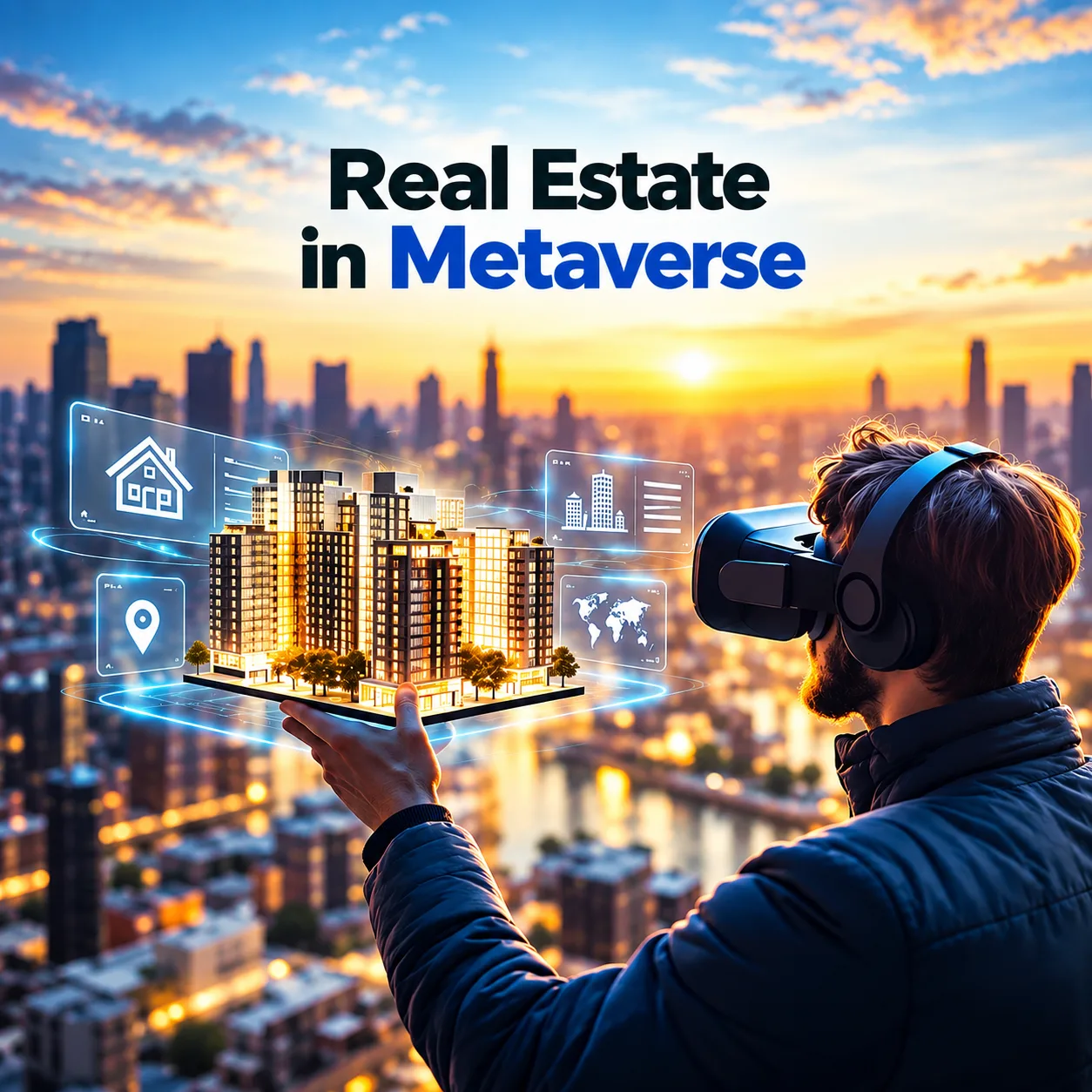
Search for metaverse real estate Dubai, and you will usually find two very different ideas mixed. The first is virtual property. You buy, develop, rent or sell a digital parcel inside an online world. The second is tokenised real estate, where blockchain-based tokens represent rights or economic interests connected to an actual property.
That difference is important in Dubai.
Dubai Land Department, or DLD, launched its Real Estate Tokenisation Project in March 2025. In February 2026, it moved into Phase II, which introduced controlled secondary-market resale. VARA has made clear that this remains a regulated testing and evaluation programme rather than an unrestricted market for tokenised property.
Virtual land inside a metaverse platform works differently. Buying a digital parcel does not give you a Dubai title deed. Your rights depend on the platform, the token or NFT involved and the contracts governing its use.
That distinction should sit at the centre of any metaverse real estate business plan.
What Is Metaverse Real Estate in Dubai?
Metaverse real estate generally refers to digital spaces that users can own, access, develop or monetise inside virtual environments.
A business might build a virtual office, retail store, property showroom, event venue, branded experience or digital version of an existing building. Some platforms also let users buy parcels represented by NFTs and later sell or rent them.
For Dubai businesses, another category is becoming more relevant: digital twins. A developer can create an interactive 3D version of a real project so an overseas buyer can explore the property remotely.
Dubai has actively encouraged this wider digital economy. The Dubai Metaverse Strategy aims to support more than 40,000 virtual jobs by 2030 and position the city among the world's leading metaverse economies. Earlier government targets also put the potential economic contribution at about US$4 billion by 2030.
In a 30-minute call we map your situation against jurisdiction, activity and cost — no commitment required.
Metaverse Real Estate Business Models
There is no single way to make money from virtual property. Your regulatory obligations can also change completely depending on the model.
Business model | How revenue is generated | Main issue to check |
Virtual land development | Buy or develop digital parcels and sell them | NFT structure, platform rules and marketing |
Virtual leasing | Rent digital offices, shops or event spaces | Contract terms and IP rights |
Digital twins | Build 3D versions of physical properties | Property advertising, data and IP |
Virtual property marketplace | Charge listing or transaction fees | VARA classification and customer protection |
Tokenised physical property | Offer fractional economic interests in real assets | DLD, VARA, securities and AML rules |
Metaverse events and commerce | Tickets, sponsorships, digital products and advertising | Consumer law, data, IP and tax |
One of the more practical opportunities is the digital-twin model. Property developers can let prospective buyers walk through a development virtually before construction is complete. Commercial landlords can do the same with offices, hotels and retail units.
CBRE has identified 3D property tours, digital assets and virtual versions of commercial spaces among potential real-estate uses of metaverse technology.
Tokenised Property Is Becoming a Separate Opportunity
Dubai's progress in property tokenisation deserves attention, but it should not be confused with speculative virtual land.
DLD's first tokenised real estate project attracted 224 investors representing 44 nationalities. Around 70% were entering Dubai's property market for the first time and the average individual investment was AED 10,714. DLD also reported more than 6,000 requests on the waiting list.
DLD expects the value of Dubai's real estate tokenisation market to potentially reach AED 60 billion by 2033, equivalent to about 7% of projected real estate transactions. That is a DLD projection, not a guaranteed market outcome.
For founders, this creates possible demand for tokenisation infrastructure, investor onboarding, compliance software, property data systems, smart-contract technology and regulated distribution services.
Legal Issues in Metaverse Real Estate Dubai
The technology may be new, but businesses still operate within existing UAE laws. In several areas, additional virtual-asset rules also apply.
- Your Trade Licence May Not Be Enough
A software company creating 3D virtual property environments is very different from a business issuing tokens, operating an exchange or arranging virtual-asset transactions.
Dubai's Virtual Assets Regulatory Authority regulates virtual asset activities in Dubai mainland and its free zones, except the Dubai International Financial Centre. Regulated activity cannot simply be added to an ordinary technology licence without the necessary approval.
If your model involves NFTs, token issuance, custody, exchange, brokerage or another virtual-asset service, determine its regulatory classification before launching.
Nexture's guide to starting a crypto business in Dubai and obtaining VARA approval explains how that separate approval process works.
- An NFT Does Not Automatically Equal a Property Title
This is where many projects get confusing.
If you buy an NFT representing a parcel in a virtual world, the token may prove control over a blockchain address or certain platform rights. It does not automatically give you ownership of physical Dubai property.
You also need to check what the purchase agreement actually transfers. Can you lease the virtual parcel? Modify it? Commercialise it? Transfer it outside the platform? What happens if the platform closes?
Contracts and platform terms need to answer those questions clearly.
Physical Dubai property follows a different system involving DLD registration. Businesses entering the conventional market should review the requirements for setting up a real estate company in Dubai separately.
- VARA Rules Can Apply to Marketing
VARA's 2024 Marketing Regulations apply to marketing of virtual assets and related activities in or targeting the UAE. The framework covers advertisements, promotions, offers, social media activity and other commercial communications.
So a metaverse property project should be careful about promising guaranteed returns, presenting speculative digital land as equivalent to registered property or promoting a regulated service without the required authorisation.
- AML Checks Become Important When Money and Tokens Meet
Crypto-linked real estate receives additional attention under UAE anti-money laundering controls. For physical freehold property transactions, UAE rules require real estate brokers and agents to submit a Real Estate Activity Report through goAML where payment involves virtual assets, funds converted from virtual assets or qualifying cash transactions of AED 55,000 or more.
That requirement concerns real property transactions rather than ordinary virtual land. Still, it shows why businesses combining blockchain and real estate need strong customer identification, source-of-funds checks and transaction records.
- Data Privacy Cannot Be an Afterthought
Immersive platforms can collect far more than a name and email address. Depending on the technology, you may process location information, behavioural data, voice recordings, device identifiers or movement data.
The UAE Personal Data Protection Law sets rules for processing and securing personal data. It also requires impact assessments in certain high-risk cases involving modern technologies.
A metaverse platform should therefore build privacy controls into registration, analytics and user tracking before launch.
- Brands and Digital Assets Need IP Protection
Virtual buildings can contain logos, architecture, branded interiors, digital artwork, avatars and other protected content.
UAE trademark research has already examined the treatment of virtual goods, NFTs, 3D marks and related metaverse uses under the country's trademark framework.
Your contracts should state who owns the 3D model, software, artwork and branded content, along with what users are allowed to copy or commercialise.
Where Are the Business Opportunities?
The strongest opportunities may come from services around virtual property rather than simply buying digital land and waiting for its price to rise.
Property developers need immersive sales environments. Architects can offer digital twin services. Retail companies can test virtual stores. Event operators can create paid digital venues. PropTech firms can build property-data tools and regulated tokenisation infrastructure.
Dubai is also giving PropTech companies a route to test new models. The PropTech Data Sandbox, supported by Dubai Future Foundation, DLD and Digital Dubai, allows selected companies to test solutions using property-related data under controlled regulatory conditions.
We’ll model the requirements and send back a single-page breakdown within 24 hours.
How to Start a Metaverse Real Estate Business in Dubai
Before spending money on virtual land or software development, work through the business model in this order:
Define exactly what you will sell. Decide whether the company provides software, virtual design, digital property, NFT services, tokenisation or regulated investment-related services.
Choose the correct jurisdiction and activity. Compare Dubai mainland and suitable free zones based on your customers and actual operations.
Check VARA exposure before launching tokens. A technology licence and a virtual-asset licence solve different regulatory requirements.
Document ownership rights. Set clear rules for digital land, NFTs, 3D designs, licensing rights, transfers and platform shutdown scenarios.
Build compliance into payments and onboarding. KYC, AML controls, privacy, cybersecurity and customer disclosures should be designed before transactions begin.
Test the commercial demand. A digital twin that helps sell real property has a measurable business use. A virtual parcel bought only because someone expects its price to rise carries much higher demand and liquidity risk.
Risks You Should Consider
Metaverse property remains an early-stage market. Platform popularity can fall quickly. A parcel may have limited buyers outside its original ecosystem. Tokens can lose liquidity and technical failures or wallet compromises can create additional losses.
Interoperability is another issue. A building or asset created for one virtual environment may not work in another. The safer commercial approach is to start with a clear customer problem and revenue model rather than assuming virtual land itself will appreciate.
Conclusion
Metaverse real estate Dubai is developing into several different businesses under one broad label. Virtual land offers opportunities in digital development, leasing, branded spaces and events. Digital twins have practical uses for developers, brokers and commercial property companies. Tokenised physical property is moving through a much more formal regulatory path involving DLD, VARA and other authorities.
Dubai's current direction gives founders room to experiment, especially in PropTech, Web3 infrastructure and immersive property technology. It also places clear limits around regulated virtual-asset activity.
If you are planning to enter this market, define the business model before choosing the licence. The difference between building a virtual showroom and issuing an investment token is significant, both commercially and legally.
Frequently Asked Questions
Is metaverse real estate legal in Dubai?
Businesses can create and trade digital assets or provide metaverse-related services, but the regulatory requirements depend on what the asset and business actually do. Activities involving regulated virtual assets may require VARA approval.
Is virtual land the same as owning Dubai property?
No. A virtual parcel inside a metaverse platform does not by itself represent a DLD-registered title to physical property. Tokenised real property under the DLD programme follows a separate regulated structure.
Does a metaverse company in Dubai need a VARA licence?
Not every metaverse company does. A business producing 3D environments or software may operate as a technology business. If it carries out regulated virtual-asset activities, separate VARA authorisation may be required.
Can physical Dubai real estate be tokenised?
Dubai already has an official Real Estate Tokenisation Project led by DLD in collaboration with VARA and other partners. Phase II introduced controlled secondary-market testing in February 2026.
What are the main opportunities in metaverse real estate?
Current opportunities include digital twins, immersive property sales, virtual offices and retail spaces, 3D design, virtual events, PropTech platforms, tokenisation infrastructure and compliance technology.