A Dubai free zone visa gives an eligible business owner, employee or independent professional legal residence in the UAE. It is usually connected to a licensed free zone company, employment contract or freelance permit.
The details vary between free zones. Visa duration, quota, office requirements and fees may differ. A package advertised as “visa included” may still exclude medical testing, Emirates ID, health insurance or an in-country status change.
This guide explains the main visa categories, expected costs, documents and application steps so you can compare options with fewer surprises.
Key Takeaways
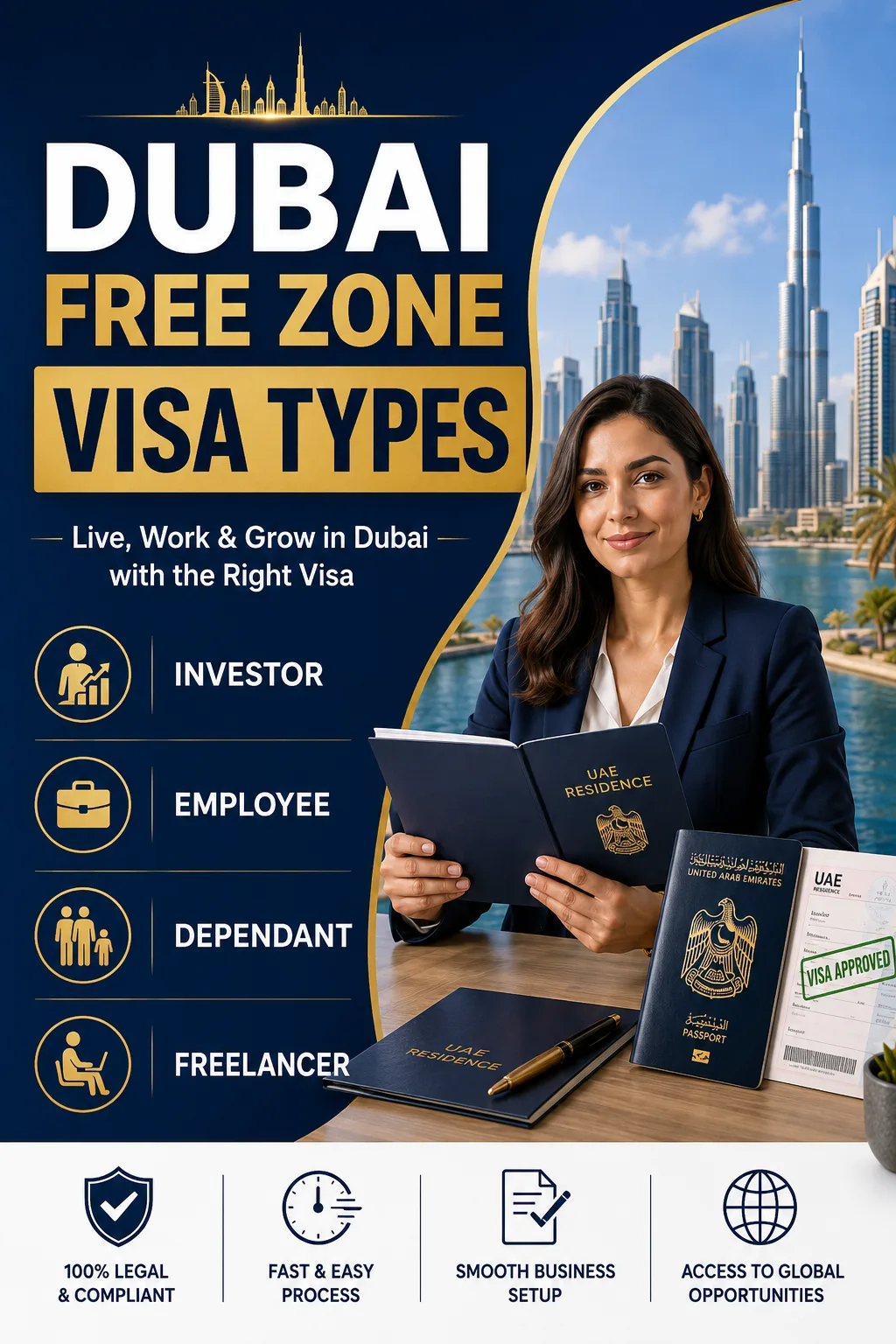
Dubai free zone visas are available for investors, employees, freelancers and dependants.
Visa eligibility depends on the company licence, quota and applicant category.
Costs vary by free zone and may exclude medical, Emirates ID and insurance fees.
Most applications take around 5 to 10 working days.
Always check the full package cost and visa terms before applying.
In a 30-minute call we map your situation against jurisdiction, activity and cost — no commitment required.
What Is a Dubai Free Zone Visa?
A Dubai free zone visa is a UAE residence visa arranged through a company or permit registered with a Dubai free zone authority. It can be issued for an owner, shareholder, employee or eligible independent professional. Once the main residence is active, the holder may also be able to sponsor qualifying family members.
The free zone normally manages the application through its portal and coordinates with Dubai immigration. The final residence permit is linked to your Emirates ID.
A standard free zone residence is typically valid for 1 or 2 years, depending on the authority and package. It remains linked to a valid company licence, establishment card and immigration file. If the licence expires or the sponsoring relationship ends, the visa may need to be renewed, transferred or cancelled.
The visa does not give unrestricted permission to take any job in the UAE. An employee is generally authorised to work for the sponsoring company. An investor or freelancer must stay within the activities covered by the relevant licence or permit.
Before choosing a package, compare the immigration benefits with the business structure. Nexture’s company formation and business setup service can help you assess whether a free zone company fits your planned activity and hiring needs.
Who Needs a Dubai Free Zone Visa?
This route is commonly used by:
Free zone company owners who wants UAE residence
Shareholders or partners named on company documents
Employees hired by a licensed free zone business
Freelancers holding an approved professional permit
Spouses, children or parents sponsored by an eligible resident
You do not always need to be a resident simply to own a company. Many founders can register remotely and manage some operations from abroad. You generally need a visa if you plan to live in the UAE and obtain an Emirates ID. Some banks, landlords and service providers may also ask for UAE residency.
If relocation is still undecided, read Nexture’s guide on setting up a Dubai company remotely.
Your company must also have an available visa allocation. The quota can depend on the free zone, licence package and workspace. A flexi-desk may have only a few workstations while a larger office can support more employees. The UAE Government’s guidance on recruiting in free zones confirms that employment procedures are managed through the relevant free zone authority.
Main Types of Dubai Free Zone Visas
Free zones may use slightly different names, but most applications fall into four categories.
Visa type
Main applicant
Sponsorship basis
Common validity
Investor or partner visa
Owner or shareholder
Ownership in a free zone company
Often 1 or 2 years
Employment visa
Company employee
Sponsorship by employer
Often 1 or 2 years
Dependant visa
Spouse, child or eligible parent
Sponsorship by resident
Linked to sponsor
Freelancer residence visa
Independent professional
Freelance permit or approved setup
Often 1 or 2 years
Investor or Partner Visa
This visa is for a founder, shareholder or business owner named in the free zone company records. It suits people who want to manage their Dubai business and hold UAE residence without being employed by another company.
You normally need a trade licence, establishment card and proof of ownership such as a share certificate or incorporation document. The terms “investor” and “partner” may be used differently depending on the company’s legal form.
A standard investor visa is separate from the five-year Green Residence and ten-year Golden Residence. Those long-term routes have their own eligibility conditions.
Employment Visa
An employment visa is for a person hired by a free zone company. The company acts as sponsor and submits the application through the relevant free zone.
The business must hold an active licence, an establishment card and sufficient visa quota. The employee normally provides a passport, photograph and signed offer or contract. Skilled or regulated roles may also require an attested qualification or outside approval.
Free zone employment is processed through the zone rather than the normal mainland channel. The job title, salary and qualifications should match the application records.
Nexture’s corporate tie-up and PRO services can support companies with employee visa files, renewals and government documentation.
Dependant Visa
A dependent visa allows an eligible resident to sponsor family members. The most common applicants are a spouse and children. Parents may also qualify under additional conditions.
The sponsor must have a valid UAE residence and meet the income and accommodation requirements. Current federal guidance generally sets the minimum at AED 4,000 per month or AED 3,000 plus employer-provided accommodation.
You will usually need an attested marriage certificate for a spouse and attested birth certificates for children. Foreign documents may need legalisation and Arabic translation. Adults aged 18 and above must complete a medical fitness test. Health insurance is mandatory for Dubai residents.
For support with entry permits, medical tests, Emirates ID and family residence, see Nexture’s family visa services in Dubai.
Freelancer Visa
“Freelancer visa” is widely used in marketing, but the legal structure is often a freelance permit plus a separate residence visa. Not every free zone offers the same professional activities or package.
This option can suit consultants, creatives, educators and technology professionals working in approved fields. Applicants may need a CV, portfolio, qualifications or proof of experience.
Some free zones issue an employment-style residence connected to the freelance licence and establishment card. The official GoFreelance platform lists its permit, establishment card and visa as separate items.
Check the activity carefully. A design permit does not authorise management consultancy or product trading. If you plan to hire staff or expand, a single-owner free zone company may be more practical.
Dubai Free Zone Visa Cost
There is no fixed Dubai free zone visa cost. The total depends on the authority, category, duration and whether you apply from inside or outside the UAE.
As a broad example, the visa charge alone can range from about AED 2,200 to AED 5,100 in established Dubai free zones. The full residence process may cost more.
DMCC’s official schedule of charges lists different fees for one-year and two-year employment residence permits and higher charges for some in-country applications. GoFreelance currently lists AED 4,600 for a one-year visa and AED 5,042 for a two-year visa, plus a separate AED 2,000 establishment card. Fees can change.
Other possible charges include:
Entry permit and status adjustment
Medical fitness test
Emirates ID issuance and typing
Health insurance
Establishment card
Security deposit in some cases
Attestation, translation and delivery fees
ICP lists Emirates ID issuance fees per year of residence plus a smart-service charge. Its residence permit service also lists separate application, issuance and status-adjustment charges. These amounts may be included in your free zone package or billed separately.
Ask for an itemised quotation showing the licence, visa allocation, establishment card, immigration fees, medical test, Emirates ID, insurance and status change. This is the only reliable way to compare packages.
Documents Required for a Dubai Free Zone Visa
The checklist varies, but common documents include:
Passport copy valid for at least six months
Recent passport-size photograph with a white background
Free zone licence and establishment card
Share certificate or company documents for an investor
Employment contract or offer letter for an employee
Freelance permit and qualifications where applicable
Current UAE visa or entry record, if applicable
Medical fitness result for applicants aged 18 and above
Emirates ID application and biometrics where required
Valid Dubai health insurance
Attested marriage or birth certificates for dependants
Make sure your name, passport number and date of birth match across every document. Small spelling differences can delay approval. The exact checklist can change depending on your nationality, job title, free zone and visa category.
Nexture’s ICP Smart Services guide explains how residence and Emirates ID services are handled online. The official ICP residency permit service confirms that residence issuance is linked to the Emirates ID application.
We’ll model the requirements and send back a single-page breakdown within 24 hours.
Dubai Free Zone Visa Application Process
- Confirm Visa Eligibility
Check that the company licence and establishment card are active. Confirm the visa quota and applicant category. Employees should verify the job title while investors should check their ownership records. Freelancers need an approved activity and permit.
- Apply for Entry Permit
The company or authorised representative applies through the free zone portal. An approved applicant outside the UAE uses the permit to enter and complete the residence steps.
- Complete Status Change if Required
An applicant already in the UAE may be able to change status without leaving the country. This carries an extra fee. Keep your current visa valid while the new file is being processed to avoid fines or complications.
- Complete Medical and Emirates ID Steps
Applicants aged 18 and above must pass the required medical fitness screening. You must also submit the Emirates ID application and complete biometrics when requested.
The UAE Government’s general residence visa rules confirm the medical fitness and Emirates ID requirements.
- Receive Residence Visa Approval
After medical, insurance and identity requirements are complete, the application goes for final approval. The residence permit is issued electronically and the Emirates ID follows the approved delivery process.
A straightforward investor or employment application may take around 5 to 10 working days after the licence and documents are ready. Dependant or more complex cases may take 10 to 15 working days. The actual timeline depends on the free zone and immigration review.
Common Mistakes to Avoid
A cheap package can become expensive when key services are excluded. Check whether it includes a visa allocation, establishment card, entry permit, medical test, Emirates ID, insurance and status change.
Other common problems include an incorrect job title, unclear passport scan, unattested family documents and an expiring company licence.
Business owners should also plan ahead. A one-visa package may be unsuitable if you expect to hire two or three employees within a few months. Ask how much it will cost to add visa slots or upgrade the workspace later.
Conclusion
The right Dubai free zone visa depends on your role. Owners normally use an investor or partner route. Employees need company sponsorship. Independent professionals may use a freelance permit with a separate residence process. Family members apply through an eligible resident sponsor.
Before paying, confirm the visa quota, validity, approved activities and full cost in writing. Check whether medical testing, Emirates ID, insurance and status adjustment are included.
Our Experts at Nexture can help streamline free zone company formation, visa applications, documentation and ongoing PRO requirements so your business and residence files remain properly aligned.