
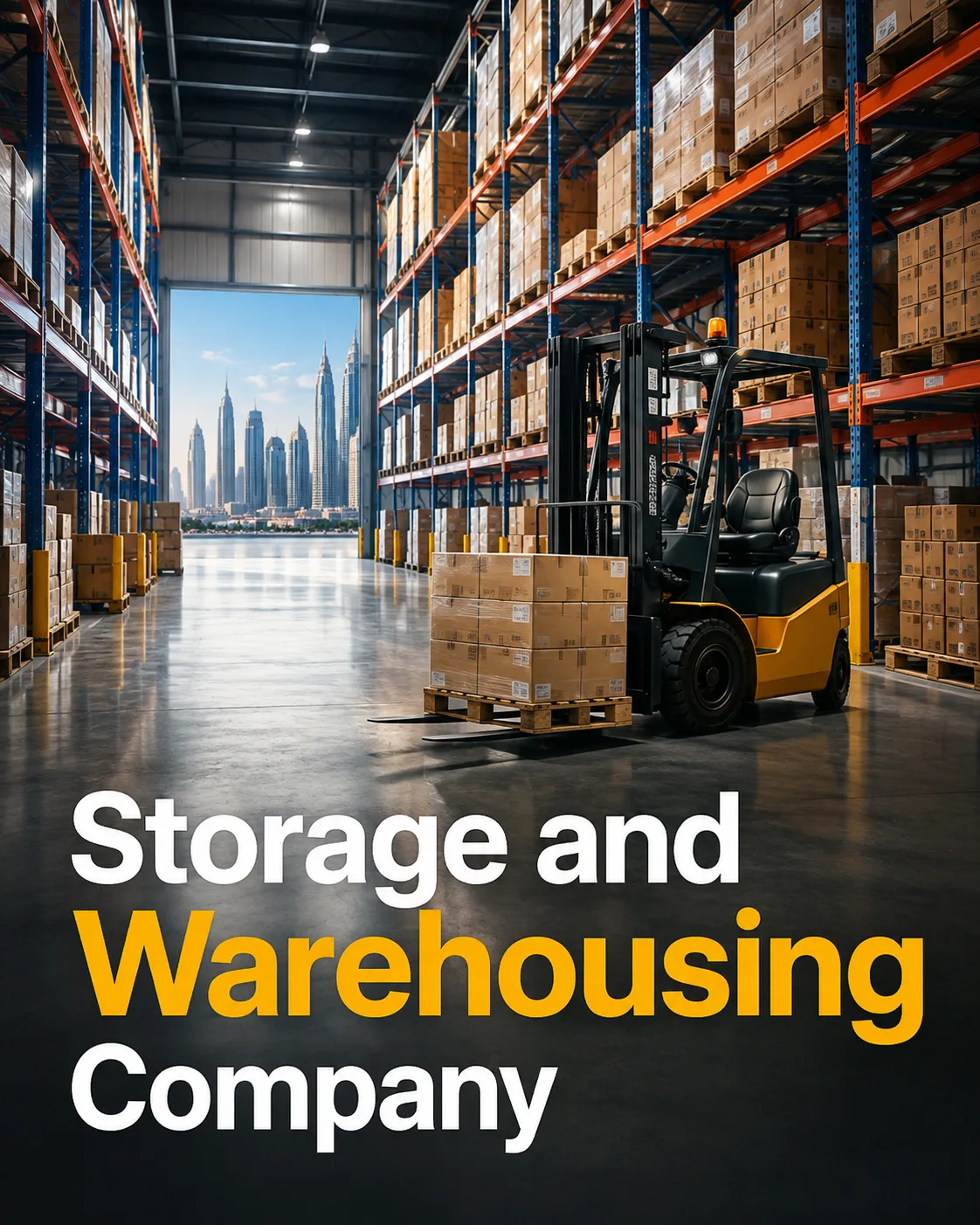
Dubai handles a huge volume of regional and international trade, so businesses constantly need somewhere to receive, store, manage and dispatch goods. That creates room for warehousing companies serving e-commerce sellers, importers, retailers, manufacturers and international distributors.
But opening a warehouse involves more than getting a trade licence and renting an industrial unit. You need the correct business activity, premises approved for that activity, fire and safety compliance and, depending on what you store, additional customs or municipality approvals.
Get these decisions right at the beginning and the setup becomes much easier to manage.
What Does a Storage and Warehousing Company Do in Dubai?
A warehousing company can simply provide storage space or operate as part of a wider third-party logistics business.
Your services may include:
General goods storage
Third-party warehousing or 3PL
Inventory management
Order fulfilment
E-commerce fulfilment
Container and pallet storage
Packing for transportation
Cold storage
Distribution and dispatch
One distinction needs to be clear: are you storing goods belonging to clients or buying and selling those products yourself?
For example, JAFZA's logistics licence allows storage, transportation, distribution, sorting, order management and inventory management. It permits a logistics company to hold physical inventory for customers, but the company cannot use that licence to purchase and sell those goods itself.
If you plan to trade your own inventory, you may need the relevant commercial or trading activity alongside your storage operations.
In a 30-minute call we map your situation against jurisdiction, activity and cost — no commitment required.
Which Licence Do You Need for a Warehouse Company?
There is no single warehouse licence that fits every business.
For mainland companies, the Dubai Department of Economy and Tourism issues licences according to approved business activities. Its commercial licensing framework covers activities such as trading, import, export, wholesale and distribution. Your selected activity must match what your warehouse actually does.
A free-zone company follows the licensing rules and activity list of that particular zone. JAFZA, for instance, offers a specific logistics licence covering services such as warehousing and inventory management.
Settle your activity before signing a long warehouse lease. A cheap warehouse is not useful if the authority will not approve it for your intended operation.
Mainland or Free Zone for Warehousing?
Both can work. Mainland Dubai usually makes sense when most customers and deliveries are within Dubai or the wider UAE. You have greater flexibility for UAE-facing commercial operations, although the premises must meet the requirements for your licensed activity.
Free zones can be attractive for import, re-export, international distribution and logistics operations connected to ports or airports.
If you are still deciding between the two jurisdictions, Nexture's Dubai mainland vs free zone guide covers the main differences.
Approvals Required for a Warehouse in Dubai
Your final approval list depends heavily on what you store.
- Trade Licence
Your licence must include the correct storage, warehousing, logistics or trading activity.
- Warehouse Lease and Premises Approval
UAE business rules require companies to have an appropriate operating address, and mainland businesses in Dubai generally need their lease registered through Ejari. Certain activities also require approvals from other government bodies.
- Fire and Safety Compliance
Warehouses have to meet applicable fire and life-safety standards. Fire alarms, emergency exits, suppression systems, firefighting equipment and access arrangements can all affect approval.
Adding mezzanine floors, large racking systems or cold rooms may create further technical requirements.
- Dubai Municipality Requirements
The rules become more specific when you store food, cosmetics, consumer products, chemicals or similar controlled goods.
Dubai Municipality currently publishes dedicated guidelines for safe storage, consumer product storage, forklifts, occupational safety, and related activities.
Check the applicable Dubai Municipality technical guidelines before planning your warehouse layout.
- Customs Approval
Businesses importing goods may also need Dubai Customs registration.
A customs-bonded warehouse is different from an ordinary warehouse. Dubai Customs currently charges AED 25,000 for a private customs warehouse licence and AED 150,000 for a public customs warehouse licence.
It also lists an AED 50,000 guarantee for private warehouses and AED 1.5 million for public warehouses.
- Product-Specific Approvals
Food, pharmaceuticals, medical products, chemicals and dangerous goods can come with extra requirements.
Do not sign the lease until you know whether your intended goods can legally be stored there.
How to Start a Storage and Warehousing Company in Dubai
- Define Exactly What You Will Do
Write down your operating model first.
Will you store client inventory? Will you own the goods? Will you provide fulfilment? Will you run cold storage? Will trucks deliver directly to customers?
These answers determine your licence and approvals.
- Choose Mainland or Free Zone
Match the jurisdiction to your customers and supply chain.
Port-based import and re-export businesses may prefer JAFZA. Air-cargo and e-commerce operations may find Dubai South more practical. UAE-focused businesses often consider mainland locations.
- Reserve Your Trade Name and Obtain Initial Approval
Choose the appropriate legal structure, reserve the company name and submit your initial licence application.
- Find a Suitable Warehouse
Do not judge a warehouse by rent alone.
Check:
Approved property use
Total floor area
Ceiling height
Floor load
Truck and container access
Loading bays
Electrical capacity
Fire systems
Racking possibilities
Office space
Temperature requirements
Future expansion space
- Complete Fit-Out and External Approvals
Submit technical plans where required and complete fire, municipality, utility and sector approvals.
- Get the Trade Licence
After the lease and required approvals are accepted, complete your licence payment and collect the company documents.
Businesses importing or exporting goods should also consider customs registration. Nexture's import-export licence guide explains the wider trading and customs process.
- Build Your Warehouse Operations
Before receiving inventory, set up your:
Warehouse management system
Barcode or RFID process
Stock reconciliation
CCTV
Insurance
Racking
Material-handling equipment
Receiving procedures
Dispatch controls
Pest-control procedures where applicable
Good inventory records become particularly important if customs-controlled goods are involved.
Documents Commonly Required
The exact list changes by jurisdiction, but commonly requested documents include:
Passport copies of shareholders and manager
Emirates ID and UAE visa copies where applicable
Trade-name reservation
Initial approval
Incorporation documents
Memorandum of Association where required
Warehouse tenancy agreement
Site or layout plans
Landlord NOC where applicable
External approval certificates
Corporate shareholder documents, if applicable
Regulated products can add further technical and authority-specific paperwork.
How Much Does It Cost to Start a Warehousing Company in Dubai?
There is no sensible one-price answer because warehouse rent and fit-out usually cost far more than company registration.
Cost Item | Typical Planning Figure |
Company formation and licence | AED 12,000 to AED 30,000+ |
Warehouse lease | Depends on area, size and specification |
Fit-out, fire systems and approvals | AED 15,000 to AED 100,000+ |
Racking, CCTV, equipment and WMS | AED 20,000 to AED 150,000+ |
Residence visa | Around AED 4,000 to AED 7,000 per person |
Private customs warehouse licence | AED 25,000 |
Public customs warehouse licence | AED 150,000 |
Dubai's industrial property market is currently tight. Knight Frank reported Grade A warehouse rents of about AED 90 per sq. ft. annually in Al Quoz and AED 55 per sq. ft. in Dubai South during H1 2026.
At AED 55 per sq. ft., a 5,000 sq. ft. unit would cost roughly AED 275,000 per year in rent alone.
That example explains why you should calculate your business around the actual warehouse rather than an advertised low-cost licence package.
We’ll model the requirements and send back a single-page breakdown within 24 hours.
Best Areas for Warehousing in Dubai
Jebel Ali and JAFZA: Good for port-linked logistics, import, export and re-export.
Dubai South: Suits air freight, e-commerce fulfilment and large distribution operations.
Dubai Industrial City: Suitable for industrial, manufacturing and larger logistics requirements.
Al Quoz: Centrally located and close to major commercial areas, although quality warehouse space can be expensive.
Dubai Investment Park and Ras Al Khor: Established areas with strong industrial and warehouse activity.
The cheapest rent does not always produce the lowest operating cost. Truck journeys, customer locations, delivery times and port access need to be part of the calculation.
Common Mistakes to Avoid
One of the most expensive mistakes is choosing the licence before defining the operating model.
Other problems include renting a warehouse without checking its approved use, underestimating fire-safety costs, choosing premises with inadequate electrical capacity and assuming every free zone supports physical warehousing.
Another common error is treating an ordinary warehouse as if it were a customs-bonded facility. Bonded storage requires separate customs licensing, financial guarantees and inventory controls.
Conclusion
Starting a storage and warehousing company in Dubai can make commercial sense, especially with the city's large trading, e-commerce and distribution sectors.
Your first decision should be what happens inside the warehouse. Decide whether you are storing client goods, trading your own inventory or providing wider logistics services. Then choose the jurisdiction, secure suitable premises and complete the required safety, customs and product approvals.
The trade licence is often one of the smaller expenses. Warehouse rent, fit-out, equipment and compliance will usually determine your real first-year investment.
Frequently Asked Questions
Can a foreigner start a warehousing company in Dubai?
Yes. Foreign investors can establish warehousing and logistics businesses through mainland and free-zone structures, subject to the rules attached to the selected business activity.
Do I need a physical warehouse to get a warehousing licence?
A genuine warehousing operation will normally require appropriate physical premises. The stage at which the lease is required depends on the licensing authority and activity.
Can I store goods belonging to other companies?
Yes, provided your licence includes the relevant warehousing or logistics activity. Your insurance, contracts, inventory procedures and product approvals should also cover the goods you accept.
Do I need a customs warehouse licence?
Only if you intend to operate under the customs warehousing regime. A standard warehouse does not automatically qualify as a customs-bonded warehouse.
Which Dubai free zone is best for a warehousing company?
It depends on your supply chain. JAFZA is well suited to port-based import, export and re-export operations. Dubai South is attractive for air cargo, e-commerce fulfilment and distribution linked to Al Maktoum International Airport.