
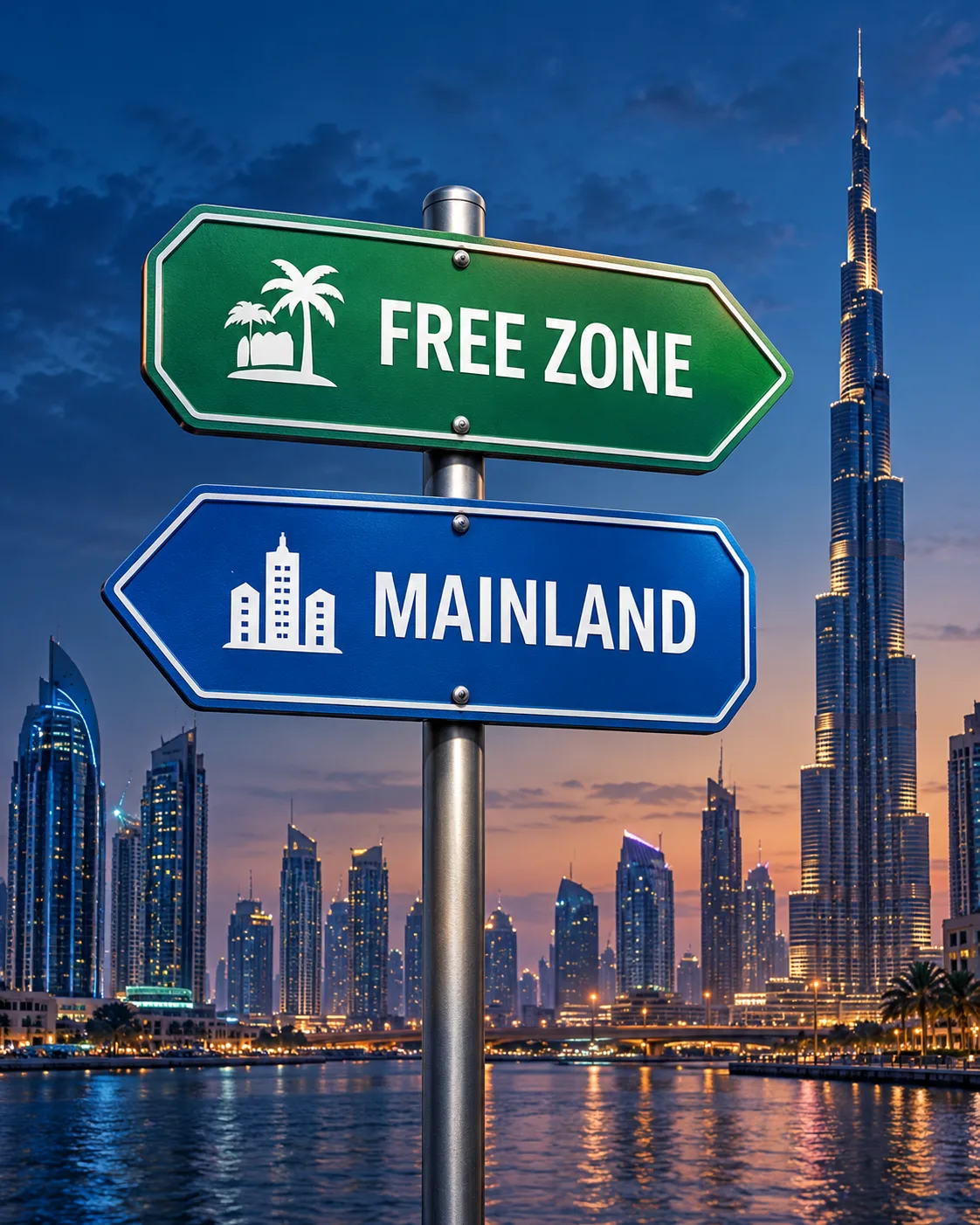
Last year, Dubai introduced a major change for businesses operating in its free zones. Companies can now apply for a permit to conduct approved business activities on the Dubai mainland without necessarily establishing a separate mainland company.
The Free Zone Mainland Operating Permit, launched on 8 October 2025, allows eligible free zone businesses to expand into the local market through a simplified digital application process.
Introduced by the Dubai Department of Economy and Tourism (DET) through the Dubai Business Registration and Licensing Corporation (DBLC), the initiative is expected to benefit more than 10,000 free zone companies. The permit costs AED 5,000, remains valid for six months and can be renewed. Eligible businesses holding a Dubai Unified Licence can apply through the Invest in Dubai platform.
For entrepreneurs who already operate in Dubai's free zones, this creates a practical opportunity to work with mainland customers, pursue local contracts and expand without immediately changing their existing company structure.
However, the permit has specific eligibility requirements, activity restrictions and tax implications that business owners should understand before applying.
What Is the Dubai Free Zone Mainland Operating Permit?
The Dubai free zone mainland permit is an official authorisation that allows eligible free zone establishments to conduct approved commercial activities outside their free zone and within mainland Dubai.
The initiative was formally launched on 8 October 2025 under the framework established by Dubai Executive Council Resolution No. 11 of 2025.
Previously, many free zone businesses seeking to establish an operational presence on the mainland had to consider additional licensing arrangements, a mainland branch or another corporate structure.
The new permit offers an additional route for qualifying businesses.
According to the Dubai Department of Economy and Tourism, the initiative supports domestic trading, participation in government contracts and easier business operations between free zones and the mainland.
The main features include:
Permit cost: AED 5,000
Validity: Six months
Renewal: AED 5,000 for another six months
Application: Online through Invest in Dubai
Eligibility: Qualifying Dubai free zone companies holding a Dubai Unified Licence
Initial activities: Technology, consultancy, design, professional services and trading, subject to approval
The permit does not replace the original free zone licence. Businesses must retain a valid free zone licence and comply with the conditions governing their approved mainland activities.
In a 30-minute call we map your situation against jurisdiction, activity and cost — no commitment required.
What Changed Under Dubai Executive Council Resolution No. 11 of 2025?
Dubai Executive Council Resolution No. 11 of 2025 established a regulatory framework allowing free zone businesses to conduct approved activities elsewhere within the emirate.
Issued on 3 March 2025 and publicly announced on 17 March 2025, the resolution provides three licensing pathways.
Licensing option | Validity | Government fee |
Mainland branch operating from mainland premises | One year, renewable | Depends on applicable licensing rules |
Branch operating from the free zone | One year, renewable | AED 10,000 annually |
Temporary mainland activity permit | Up to six months | AED 5,000 per permit or renewal |
Under the resolution, companies must obtain approval from their free zone licensing authority and comply with relevant government regulations.
The law also requires separate financial records for mainland activities. Businesses cannot assume that their free zone licence alone authorises all mainland operations.
Businesses considering a longer-term mainland presence can also read Nexture's guide on how to move a free zone company to Dubai mainland.
Who Can Apply for a Dubai Free Zone Mainland Permit?
The permit is designed for eligible companies already licensed in Dubai's free zones. To qualify, a business generally needs to meet the following conditions.
- Hold a Valid Free Zone Licence
Your business must maintain an active trade licence issued by a recognised Dubai free zone licensing authority.
An expired or suspended licence may prevent the application from proceeding.
- Have a Dubai Unified Licence
The digital application framework is available to eligible free zone companies holding a Dubai Unified Licence (DUL).
The DUL provides a unified business identity within Dubai's licensing system and helps connect company information across relevant government platforms.
- Obtain Free Zone Authority Approval
Companies must secure the approval of their respective free zone authority before conducting mainland activities.
This remains an important requirement under the resolution, even when the business activity itself appears eligible.
- Conduct an Approved Business Activity
The proposed mainland activity must fall within the activities permitted under the applicable DET framework.
Some business activities require additional approval from specialised regulators.
- Meet Regulatory and Tax Requirements
Businesses must comply with relevant commercial laws, financial reporting obligations and corporate tax requirements.
Financial establishments licensed in the Dubai International Financial Centre are expressly excluded from the resolution.
For businesses still comparing incorporation structures, Nexture's Dubai mainland vs free zone comparison explains the differences between the two options.
Which Business Activities Are Covered?
The Free Zone Mainland Operating Permit was initially introduced for selected non-regulated business activities. According to the Government of Dubai Media Office, the framework includes these categories.
Business activity | Examples of potential mainland operations |
Technology | IT services, software development and technology consultancy |
Consultancy | Management consultancy and business advisory |
Design | Graphic design, branding and design services |
Professional services | Eligible professional and business support activities |
Trading | Approved commercial and domestic trading activities |
These examples are illustrative. Approval depends on the specific activity code and the applicable licensing conditions.
For example, a software development business operating from a Dubai free zone could explore the permit to provide approved technology services to mainland clients.
Similarly, a consulting firm may be able to serve more local businesses without forming a completely separate company.
Companies involved in healthcare, financial services, education and other regulated sectors should not assume automatic eligibility. Additional regulatory approvals or a different licensing route may be necessary.
How to Apply for a Dubai Free Zone Mainland Operating Permit
The application process is designed to be completed digitally through the Invest in Dubai platform. The exact application requirements can vary by business activity and free zone authority.
- Check Your Company Eligibility
Confirm that your free zone licence is active and that your business has a Dubai Unified Licence.
You should also verify whether your intended mainland activity is currently permitted under the relevant DET framework.
- Obtain Approval From Your Free Zone Authority
Contact your free zone authority and request the necessary approval to conduct the proposed activities outside the free zone.
The authority may review your existing licence, approved activities and corporate documents.
- Prepare the Required Documents
Under Resolution No. 11 of 2025, DET may request documents including:
Valid free zone trade licence
Memorandum of Association
Details of the intended mainland activities
Free zone authority approval
Additional information or regulatory approvals where applicable
Further documents may be required depending on the activity and licensing route.
- Submit the Online Application
Access Invest in Dubai and follow the applicable permit application procedure.
Provide the company information, select the proposed activity and submit the requested supporting documents.
- Pay the Permit Fee
The published government fee is AED 5,000 for the six-month temporary permit. Any additional approval or service charges should be confirmed before payment.
- Receive Approval and Begin Operations
Once the permit is issued, the company can conduct the authorised mainland activities within the conditions and validity period stated in its approval.
It should also maintain appropriate financial records and monitor the renewal date.
Companies seeking a permanent operational presence may find a mainland branch more suitable. Nexture's Dubai business setup guide covers the wider licensing process.
How Much Does the Dubai Mainland Activity Permit Cost?
The standard temporary mainland activity permit costs AED 5,000 for six months. If a company maintains the permit throughout the year, the published permit fees would total AED 10,000, assuming one initial permit and one renewal.
This amount excludes any additional government approvals, documentation charges or professional service fees.
For comparison, the resolution sets an annual fee of AED 10,000 for a branch operating out of a free zone. The better option depends on how frequently your company expects to conduct mainland activities and whether you need a permanent branch.
Corporate Tax and Compliance Requirements
The new permit provides additional business opportunities, but it does not automatically extend free zone corporate tax benefits to mainland operations.
Corporate Tax on Mainland Activities
The Dubai Government's announcement states that businesses operating under the mainland permit are subject to 9% corporate tax on their mainland activities.
For a Qualifying Free Zone Person, profits attributable to a domestic permanent establishment are generally taxed at 9%.
However, corporate tax is calculated on taxable income or attributable profits, not simply on total sales revenue.
According to the Federal Tax Authority's guidance on Free Zone Persons, companies must assess qualifying income, permanent establishments and the applicable tax treatment.
Free zone companies may continue to benefit from a 0% corporate tax rate on qualifying income if they meet all relevant conditions.
Separate Financial Records
Businesses operating in both jurisdictions must maintain separate financial records for their free zone and mainland activities.
These records help establish the income, expenses and profits attributable to each operation.
VAT Requirements
The mainland permit does not remove existing VAT obligations.
Under the FTA's VAT registration rules, UAE-resident businesses generally must register when taxable supplies and imports exceed AED 375,000 over the preceding 12 months or are expected to exceed that threshold within the next 30 days.
Business owners should review their corporate tax and VAT treatment before starting mainland operations.
We’ll model the requirements and send back a single-page breakdown within 24 hours.
Benefits of the New Mainland Permit for Free Zone Companies
Access to Mainland Customers
Eligible companies can conduct approved business activities directly in the Dubai mainland market.
For example, a technology consultancy based in a free zone may use the permit to expand its services to eligible mainland customers.
Government Contract Opportunities
The framework opens additional opportunities for eligible businesses seeking to participate in government procurement.
Companies must still satisfy the specific registration, supplier qualification and tender requirements of the purchasing authority.
Lower Initial Expansion Costs
The AED 5,000 temporary permit offers an alternative to immediately establishing a separate mainland business.
This may be useful for companies testing local demand before committing to a larger operational structure.
Use of Existing Employees
Article 8 of Resolution No. 11 of 2025 allows authorised establishments to use their existing workforce registered through the free zone.
This can reduce the need to recruit additional employees solely for approved mainland activities.
Retention of Free Zone Operations
Businesses can retain their existing free zone establishment while expanding into approved mainland activities.
This is particularly useful for companies that serve international clients but also want to develop a stronger presence within Dubai.
Important Restrictions Business Owners Should Know
Although the permit simplifies mainland access, several restrictions remain.
First, approval is activity-specific. A permit does not authorise every business activity listed on a company's free zone licence.
Second, the framework applies to operations within the Emirate of Dubai. Companies planning activities in Abu Dhabi, Sharjah or other emirates must check the applicable local licensing requirements.
Third, the temporary permit remains valid for a maximum of six months per issuance. Businesses must renew it when appropriate.
Finally, companies remain subject to inspections, applicable commercial regulations and financial reporting obligations.
Conclusion
Dubai's Free Zone Mainland Operating Permit provides a practical expansion option for businesses that want to operate beyond their existing free zone.
With a government fee of AED 5,000 for six months, a digital application process and permission to use existing employees, the framework can make entry into the Dubai mainland market more accessible.
However, business owners should verify their eligibility, confirm permitted activities and understand the corporate tax implications before applying.
Frequently Asked Questions
Can Dubai free zone companies now operate on the mainland?
Yes. Eligible Dubai free zone companies can apply for mainland licences or permits under Executive Council Resolution No. 11 of 2025, subject to activity-specific requirements and approvals.
How much does the Dubai free zone mainland permit cost?
The temporary Free Zone Mainland Operating Permit costs AED 5,000 for six months. Renewal costs another AED 5,000.
Can a free zone company operate on the Dubai mainland without opening a new company?
Yes, where eligible. The permit allows approved mainland activities without necessarily establishing a separate mainland legal entity.
Are all Dubai free zones eligible?
Eligibility depends on the licensing framework, the company's status and its proposed activities. Financial establishments licensed in DIFC are excluded from Resolution No. 11 of 2025.
Do free zone companies pay corporate tax on mainland income?
Mainland operations may create taxable income subject to the 9% corporate tax rate. The exact treatment depends on the company's tax status, attributable profits and applicable corporate tax rules.
Where can businesses apply for the permit?
Eligible companies holding a Dubai Unified Licence can apply digitally through the official Invest in Dubai platform.