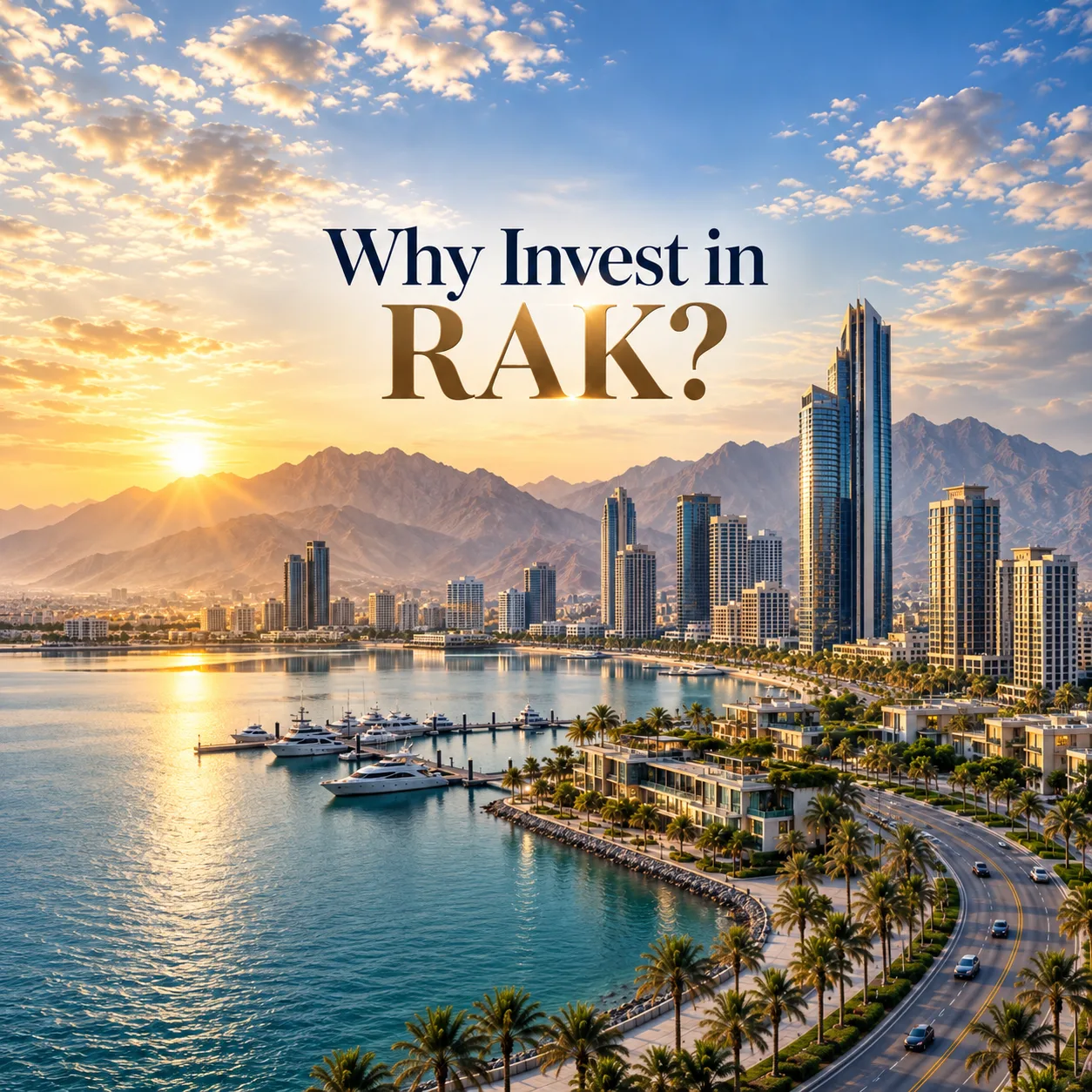
Ras Al Khaimah is getting far more attention from investors than it did a few years ago. The reason is fairly practical. Businesses can enter a growing UAE market, operate from an emirate with a broad industrial base and choose between free-zone, mainland and specialised structures without paying premium costs for every part of the operation.
The numbers show that this is more than a short property cycle. Ras Al Khaimah’s GDP reached about US$13 billion in 2025 after 4.3% growth. RAKEZ also reported nearly 19,000 new registrations during 2025. By August 2026, its business community had reached 50,000 active companies across more than 50 sectors. Tourism reached 1.35 million overnight visitors in 2025 and the emirate welcomed more than 670,000 visitors in the first half of 2026. See RAKEZ’s latest business-community update and RAK Tourism’s H1 2026 update for the latest figures.
For founders, manufacturers, property investors and regional companies, the question is now less about whether RAK is growing and more about where the strongest opportunities sit.
Why Ras Al Khaimah Is Attracting More Business Investment
RAK has one advantage that can get missed when people compare UAE locations: its economy is relatively diversified. Manufacturing, tourism, trade, real estate and services all make meaningful contributions. Marjan reports that no individual sector accounts for more than 27% of GDP.
Investor confidence is also backed by public finances. Fitch reaffirmed Ras Al Khaimah’s A+ rating with a stable outlook in 2025, pointing to economic diversification and strong long-term prospects.
Then there is company formation. In 2025, services represented 40% of new RAKEZ registrations, commercial and trading licences 33% and e-commerce 17%. India accounted for 33% of new companies, followed by Pakistan and the UK. That mix tells you RAK is attracting small service firms, international traders and larger operating businesses at the same time.
If you are comparing the emirate as a company base, Nexture’s RAKEZ company setup guide explains the current licence options, costs and setup process in more detail.
In a 30-minute call we map your situation against jurisdiction, activity and cost — no commitment required.
Best Ras Al Khaimah Investment Opportunities in 2026
- Tourism and Hospitality
Tourism is one of the clearest growth areas. RAK recorded 1.35 million overnight visitors in 2025, up 6% year on year, while tourism revenue increased 12%. In the first half of 2026, visitor numbers passed 670,000.
The longer-term plan is bigger. RAK Tourism aims to attract more than 3.5 million annual visitors by 2030 and roughly double the emirate’s hotel-room inventory.
That creates room for more than hotels. Investors can look at restaurants, destination management, events, wellness, adventure tourism, transport, holiday services and businesses supplying hospitality operators.
Wynn Al Marjan Island is currently on track for 2027. Its arrival is drawing additional attention to Al Marjan Island and the wider hospitality market, but investors should avoid building an entire business case around one development. The stronger case is the wider visitor-growth plan and expanding hotel pipeline.
- Real Estate and Construction
RAK’s property market has moved quickly, especially around Al Marjan Island, Mina and other master-planned areas. ValuStrat reported average gross rental yields of about 5.3% across freehold apartments and villas in Q2 2026. Apartment values were still 5.8% higher year on year, although quarterly movement had started to cool.
For investors, that slowdown is worth paying attention to. It means you need to assess individual projects rather than assume every launch will rise at the same pace. Investment returns are never guaranteed.
Development activity still creates a broad commercial opportunity. Marjan Beach is planned as an 85 million sq ft development with 22,000 residential units and 12,000 hotel keys. RAK Central is also moving ahead as a major commercial district, with Grade-A office projects under construction.
This supports demand for contractors, fit-out firms, building-material suppliers, facilities management companies, property services and professional consultancies.
- Manufacturing and Industrial Production
Ras Al Khaimah already has an established industrial base. That gives manufacturers access to an ecosystem that is already operating rather than one still waiting to build scale. RAKEZ supports industrial businesses with land, warehouses and facilities across sectors such as building materials, food production, engineering, packaging, metals, electronics and light manufacturing. Its 50,000-company community now spans businesses from more than 100 countries.
For an industrial investor, the practical draw is the combination of premises, port access, labour availability and connections to the wider UAE and GCC.
- Logistics, Warehousing and Trade
Saqr Port gives RAK a strong logistics argument. RAK Ports says Saqr Port and Free Zone can handle more than 100 million tonnes of cargo annually and accommodate some of the world’s largest cargo vessels. It also provides industrial land, warehousing and access to maritime logistics infrastructure through Saqr Port and Free Zone.
That makes the emirate relevant for building materials, bulk goods, regional distribution, import-export activity and companies that need storage close to a port.
RAKEZ registration data also shows continued demand for general trading and e-commerce businesses. If your company depends heavily on mainland UAE sales, however, confirm the correct route before incorporating. RAKEZ has a dual-licence arrangement for eligible businesses, but the exact structure depends on your activity.
- Technology, E-Commerce and Digital Businesses
RAK is also developing a larger technology economy. RAKEZ supports IT, software, e-commerce and digital-service businesses, while RAK Digital Assets Oasis provides a specialised free-zone framework for Web3, blockchain, AI, gaming and related non-regulated digital-asset activities.
The priorities for a technology company can be quite different from those of a hotel developer or manufacturer. A digital business may care more about licence cost, visas, banking, remote operations and access to customers than industrial infrastructure.
What Makes RAK Competitive for Company Setup?
Cost is part of the story. RAKEZ currently advertises entry-level business licence packages from AED 6,000, although the final cost can rise once you add residence visas, workspace, customs requirements, external approvals or industrial facilities. Always request a written quotation based on your exact activity before comparing jurisdictions.
Ownership is another factor. UAE federal rules allow investors of different nationalities to fully own companies across many activities. Strategic-impact and regulated sectors can still have separate requirements.
RAK also gives businesses room to scale. A consultant may begin with coworking space. A trader may need a warehouse later. A manufacturer can look at industrial land and purpose-built facilities.
Corporate Tax and Free-Zone Rules
Do not choose RAK purely because someone described it as “tax-free.” The UAE corporate-tax system applies to free-zone companies too. A Qualifying Free Zone Person can receive a 0% corporate-tax rate on qualifying income if it meets the required conditions. Income that does not qualify can be taxed at 9%.
For ordinary taxable persons, the standard rate is 0% on taxable income up to AED 375,000 and 9% on the portion above AED 375,000. Before building your financial forecast, read Nexture’s UAE corporate tax guide and map the rules against your revenue streams, customers and business activity. The structure with the cheapest licence is not always the structure with the best tax or operating result.
We’ll model the requirements and send back a single-page breakdown within 24 hours.
Is Ras Al Khaimah the Right Place for Your Business?
RAK makes the most sense when the emirate’s actual strengths match your business model. It can be a strong fit if you need industrial space, warehousing, port access, a cost-conscious free-zone setup or exposure to tourism and real estate growth. It can also work for consulting, e-commerce and technology companies that want a UAE base without requiring a premium central Dubai address.
It may be less suitable when most of your operations depend on daily access to central Dubai, a specific Dubai regulator or customers who expect your physical team to be located there.
Compare the complete operating picture: licence, office, visas, banking, tax, customs, hiring and where your customers are. That will tell you far more than the headline setup fee.
Conclusion
Ras Al Khaimah investment opportunities are expanding because several parts of the economy are growing at the same time. Tourism is setting records. Property and construction pipelines remain active. RAKEZ has reached 50,000 companies and the emirate already has serious manufacturing and port infrastructure.
For investors, some of the clearest opportunities are businesses tied to real demand: hospitality services, construction supply chains, industrial production, logistics, e-commerce and specialised technology.
The key is choosing the right structure from the start. A low-cost licence can help, but market access, premises, tax treatment and banking will determine whether the setup still works once the company begins trading.
Frequently Asked Questions
What are the main investment opportunities in Ras Al Khaimah?
The main opportunities include tourism, hospitality, real estate, construction, manufacturing, logistics, trading, e-commerce and technology. The best sector depends on your capital, customer base and whether you need physical facilities.
Is Ras Al Khaimah cheaper for business setup than Dubai?
It can be. RAKEZ currently advertises licence packages starting from AED 6,000. Your total first-year cost will depend on visas, office space, industrial facilities, approvals and other operating requirements.
Can a foreigner own 100% of a company in Ras Al Khaimah?
Yes. Full foreign ownership is available for many UAE business activities. Strategic-impact and regulated activities can have separate ownership, licensing or approval requirements.
Is RAKEZ tax-free?
Not automatically. A qualifying free-zone company may receive a 0% corporate tax rate on qualifying income if it satisfies the required conditions. Other taxable income may be subject to 9%.
Which sectors are growing in Ras Al Khaimah?
Tourism, hospitality, real estate, construction, professional services, trading, e-commerce, manufacturing and technology are seeing active investment. RAKEZ’s 2025 registration data showed particularly strong activity in services, commercial licences and e-commerce, while its business community reached 50,000 active companies in August 2026.